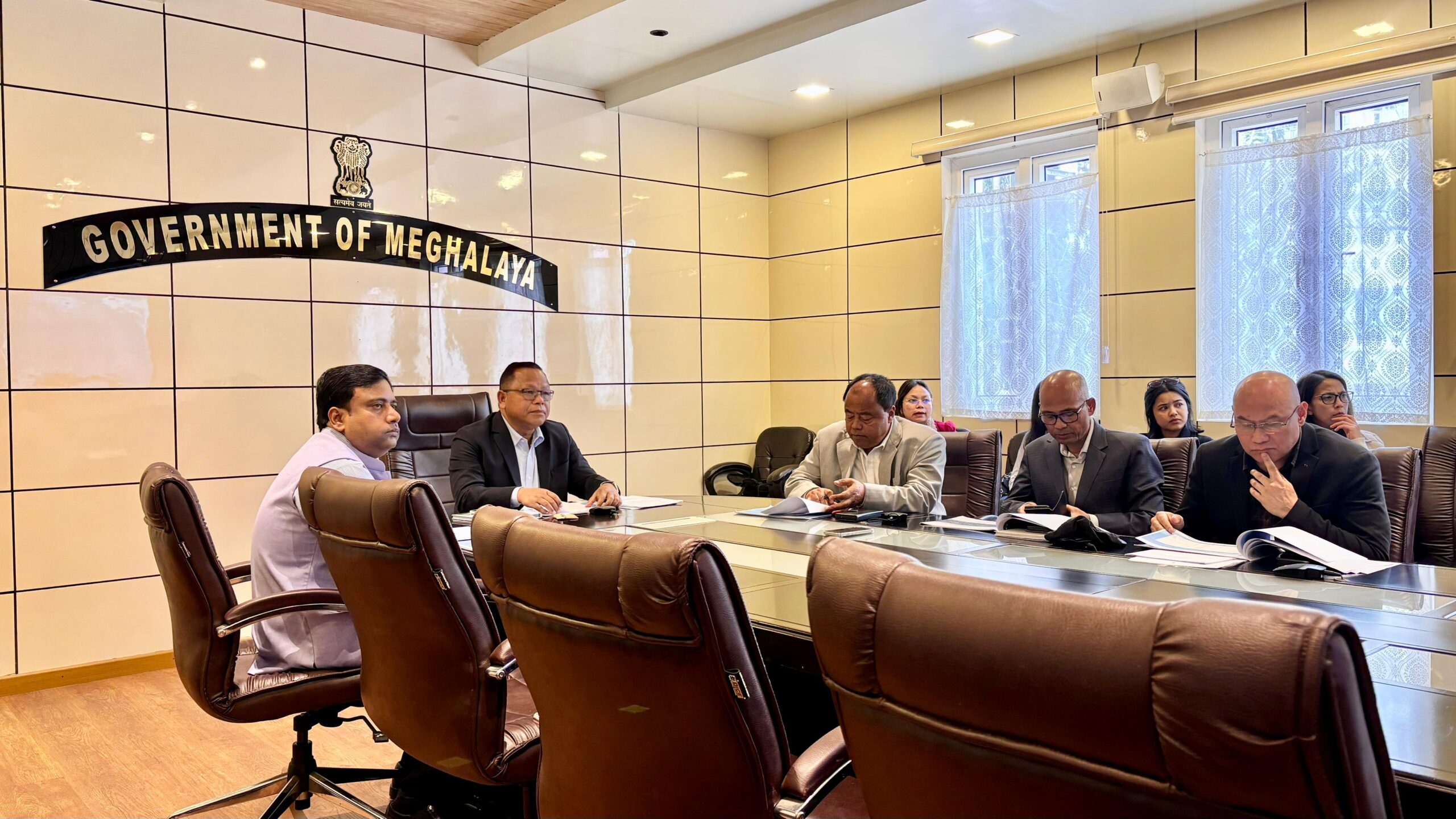
Positioning Jal Seva Ankalan at the centre of its strategy to bridge gaps between infrastructure creation and actual service delivery, the Meghalaya government has intensified district-level monitoring under Jal Jeevan Mission 2.0, directing all 12 Deputy Commissioners to ensure accountability, functionality and community ownership of rural water supply schemes. The move follows a high-level review with Deputy Commissioners across the State, amid concerns that despite the expansion of pipeline infrastructure, the conversion into functional household tap water connections remains uneven.
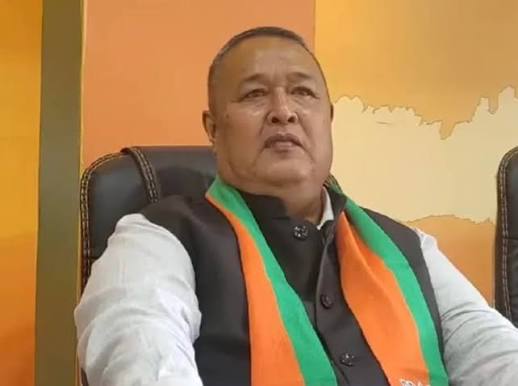
Minister in-charge PHE Marcuise N Marak said that Jal Seva Ankalan is being adopted as a district-level audit mechanism to be carried out under the supervision of Deputy Commissioners in coordination with gram sevaks and Village Water and Sanitation Committees at the grassroots, with a focus on assessing whether projects are functioning effectively and whether local bodies are taking responsibility for their operation and maintenance.
Talking to media persons in Shillong, Marak said, “With regard to the implementation of Jal Jeevan Mission 2.0, now Government of India has so many necessary steps which needs to be addressed in the district level and grassroot level as well. So today I had a meeting with all the Deputy Commissioners of the State over video conferencing.”
Detailing the progress of digital identification under rural pipe water supply schemes, he said, “The meeting was with regard to rural pipe water supply scheme, the government of India has mandated that Id has to get generated for that matter also. The PHE department has already created ID for out village infrastructure 1931 IDs have covered for 6772 habitations and 51 ID for out village infrastructure, 51 ID is pending. But in village infrastructure is also there for which 1570 IDs have already covered and for that 2500 habitations have been finalize leaving just 89 IDs in drop level.”
Highlighting the role of district administrations, he said, “So this strategies are being done and for this we have already, I had a meeting with all the deputy Commissioners of our 12 districts over video conferencing, I request requested their effort also, because they are the chairmen of EWSL District Water and Sanitation Committee, So they will have to monitor, they will have to have a meetings and minus of meeting will have to be uploaded in the JJM IMIS and based on which the Government of India will be able to review and follow up the matters.”
He underscored that Jal Seva Ankalan would be central to this monitoring framework. “Like Jal Seva Ankalan also which is kind of a audit being done by the district levels. This also will have to be done by the level of Deputy Commissioner along with the gram sevaks VWSC at the grassroot level. Those projects which are functioning well and if they are functioning, whether the Village Water And Sanitation Committees are taking care of the projects. If they are not taking care of the projects, how they will be entrusted, how they will be convinced to take over the projects, take over the ownerships and to make it functional for betterment of the villages itself.”
Conceptualised as a community-owned self-assessment mechanism, Jal Seva Ankalan enables villages to collectively reflect on their water service delivery systems rather than relying solely on infrequent and costly third-party surveys. Introduced in December 2025 under the Jal Jeevan Mission, it functions as a digital, community-led tool to assess the functionality, quality and sustainability of rural drinking water services.
The State has also constituted District Technical Units to address implementation gaps. “So these are the steps which we have discussed today. And for that matter, we are also made a District Technical Units also. Any technical issues are there, district technical unit identify and reported it with the deputy commissioner and accordingly deputy commissioner will reported back to the state government,” he said.
Reiterating the need for regular monitoring, he said, “Yes, we have instructed all the deputy Commissioners to held meeting regularly specially DWSM district water and sanitation Committees because in that district water sanitation committees will have to again upload the minutes in the MIS, based on that minutes, the Government of India will be able to monitor, See the performances. Every months they have to do it and every month the progress are being monitored.”
He stressed that administrative convergence was key to bridging gaps on the ground. “PHE department alone cannot convince the people out there, but if Deputy Commissioners are involved, or the BDOs are involved or state machineries are involved, then we will be able to address the situation.”
Pointing to persistent challenges despite infrastructure expansion, he said, “Huge infrastructures of being created through JJM project, pipes are already there, but waters are not there, What is the reason? This DWSM will monitor and find out what are the issues there. If pipes are there, why waters are not there? Whether it’s a source issue, that also we have instructed the districts to find out what measure that source issue. What is the reason why the pipe water are not there? Well, so these are the issues which will be look after by the DWSM.”
Expressing optimism over improved outcomes through district-led monitoring, he added, “DC himself will be monitoring and then we hope that after participation of the district officers there, we will be able to functional household tap water connection to all.”
On long-term sustainability measures, he said, “Now the government of India has mandated the district DWSM to strictly monitor projects. Some of the projects are already on the job, but as you are aware that rejuvenation of the stream, rivers, it’s not a short term measures. So we are going for a long time measures. In certain cases, we are planting a lots of trees, afforestation is being done. In some of the case, we are creating trenches to retained water rain water, because the Government of India also stresses for the catchy the rain where it falls. So to catch the rain where it falls, we are creating trenches also. That is also helping a lot because the moment there is rain, it goes inside the trenches, and stocks in the soil inside. So that’s how the rejuvenation part starts there.”