Even as one of the wettest regions on earth continues to capture less than 2% of its annual rainfall, the Meghalaya government has intensified efforts to “catch the rain where it falls”, turning to the trenching method, afforestation and long-term ecological restoration to address chronic rain water retention challenges, with trenches placed at the centre of its ground-level strategy.
Speaking on the State’s evolving approach, Minister in-charge of Public Health Engineering Marcuise N Marak said the focus has shifted towards sustainable, ground-level interventions aimed at improving soil absorption and rejuvenating natural rain water systems. “Some of the projects are already on the job, but the rejuvenation of the stream, rivers, it’s not a short term measures. So we are going for a long time measures,” he said.
Highlighting the role of ecological measures, he added, “In certain cases, we are planting a lots of trees, afforestation is being done. In some of the case, we are creating trenches to retained water rain water, because the Government of India also stresses for the ‘catchy the rain where it falls’. So to ‘catch the rain where it falls’, we are creating trenches also.”
Explaining how the trenching system aids rain water retention, he said, “That is also helping a lot because the moment there is rain, it goes inside the trenches, and stocks in the soil inside. So that’s how the rejuvenation part starts there.”
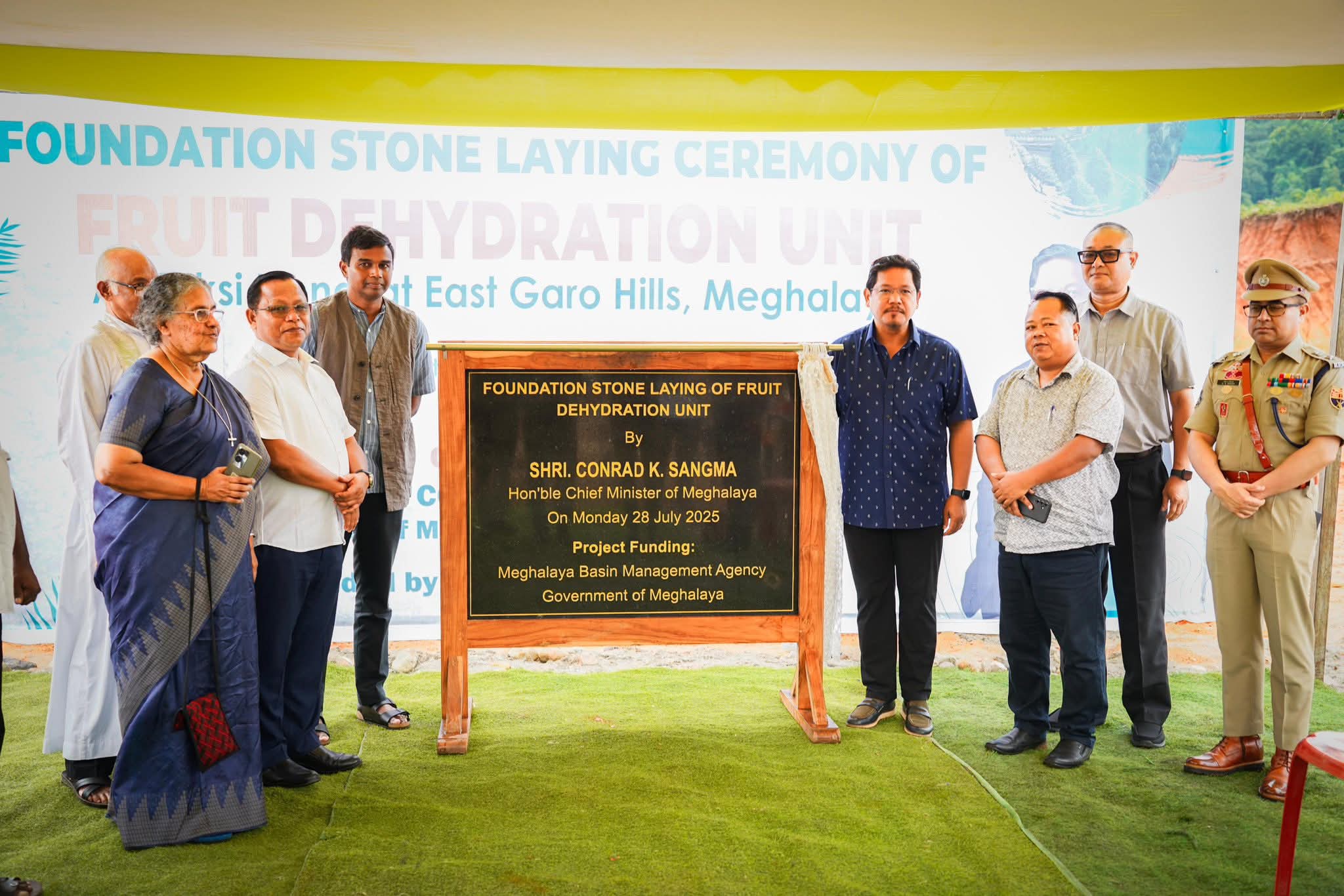
The push aligns with repeated observations by Chief Minister Conrad K. Sangma that despite receiving nearly 63 billion cubic litres of rainfall annually, Meghalaya retains only about 1 billion cubic litres — underscoring a structural gap in rain water conservation that the State now aims to address through sustained, decentralised interventions.
Meghalaya adopts trenching method to ‘catch the rain where it falls’