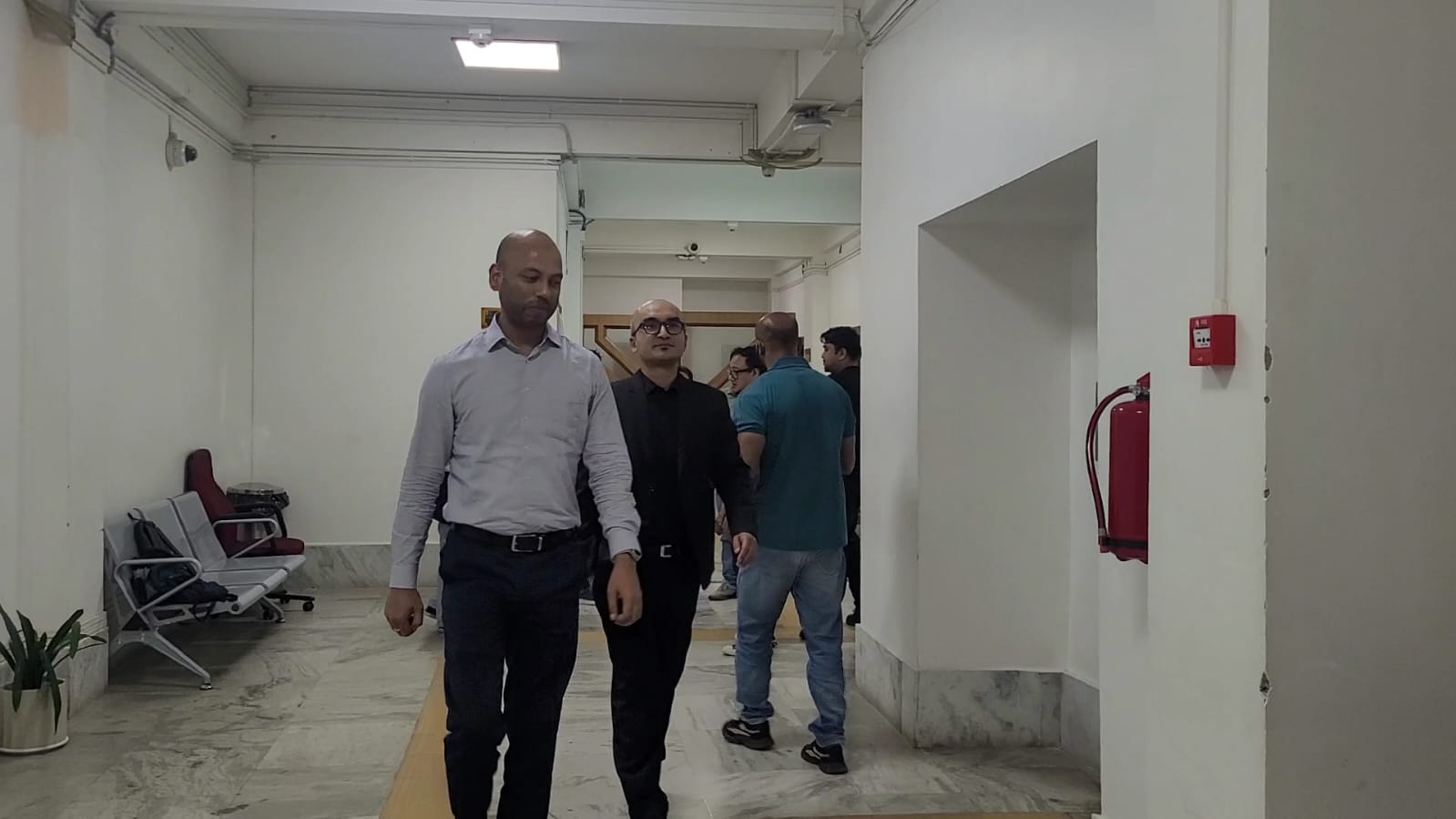

In a rare departure from high-security convoys and the comfort of official motorcades, Meghalaya’s political leadership opted for a calibrated yet quietly powerful gesture on the concluding day of the Budget Session — a move aimed at encouraging the use of public transport, particularly by students, to ease mounting congestion in Shillong. A single STEM bus, carrying the State’s most powerful lawmakers, rolled out towards Mawdiangdiang — the emerging administrative nerve centre — signalling not merely the end of legislative business for the budget session but the projection of a shared developmental doctrine rooted in accessibility and urban reform.
Led by Assembly Speaker Thomas A. Sangma, the bus ferried Chief Minister Conrad K. Sangma, Leader of the Opposition Mukul Sangma, Deputy Chief Ministers Prestone Tynsong and Sniawbhalang Dhar, along with legislators cutting across party lines — ruling and opposition alike. The destination was the under-construction New Secretariat and the New Assembly building at Mawdiangdiang, both cornerstone projects within the larger New Shillong Township matrix.
Riding the STEM bus alongside fellow legislators and the Speaker, the Chief Minister used the moment to pivot from political optics to civic messaging, urging students and parents to embrace the State’s STEM bus initiative as a structural intervention against Shillong’s traffic gridlock.
“So we are on the STEM bus and the STEM bus is also meant for our students. So this is also a message to our parents that the legislators themselves are sitting in these STEM buses and therefore, it’s absolutely safe. We are here to show that to you and to encourage more and more students and parents to adopt this because it helps in overall decongestion and easing the traffic on the streets. So, therefore we encourage parents to take STEM buses,” Chief Minister Conrad Sangma said.
The bus ride, modest in distance yet expansive in implication, traversed a longer arc of messaging: from adversarial debate within the Assembly chamber to collaborative custodianship of Meghalaya’s developmental roadmap.
At Mawdiangdiang, members walked through skeletal frameworks and rising facades of what will soon anchor the State’s administrative and legislative apparatus.
The New Shillong Township is envisioned as a future-ready urban expansion designed to host modern administrative architecture while catalysing economic multipliers in adjoining areas.
For a political fraternity often divided by ideological fault lines, the shared ride — on a bus meant for students — stood as a layered message: development is an inclusive journey, and governance, at its core, is strongest when travelled together.