A 45-day deadline has been set by the Confederation of Meghalaya Social Organisations (CoMSO) for the State government to act on two critical demands — the implementation of Special Intensive Revision (SIR) of electoral rolls and the amendment of the Scheduled Tribe (ST) Order, 1950 — with the organisation asserting that while tribals from other States enjoy full rights in Meghalaya, similar recognition is not extended to Khasi, Jaintia and Garo communities elsewhere, pointing out that in Manipur there is no provision recognising tribes from Meghalaya and that in Assam such recognition is limited to hill areas and not the plains.
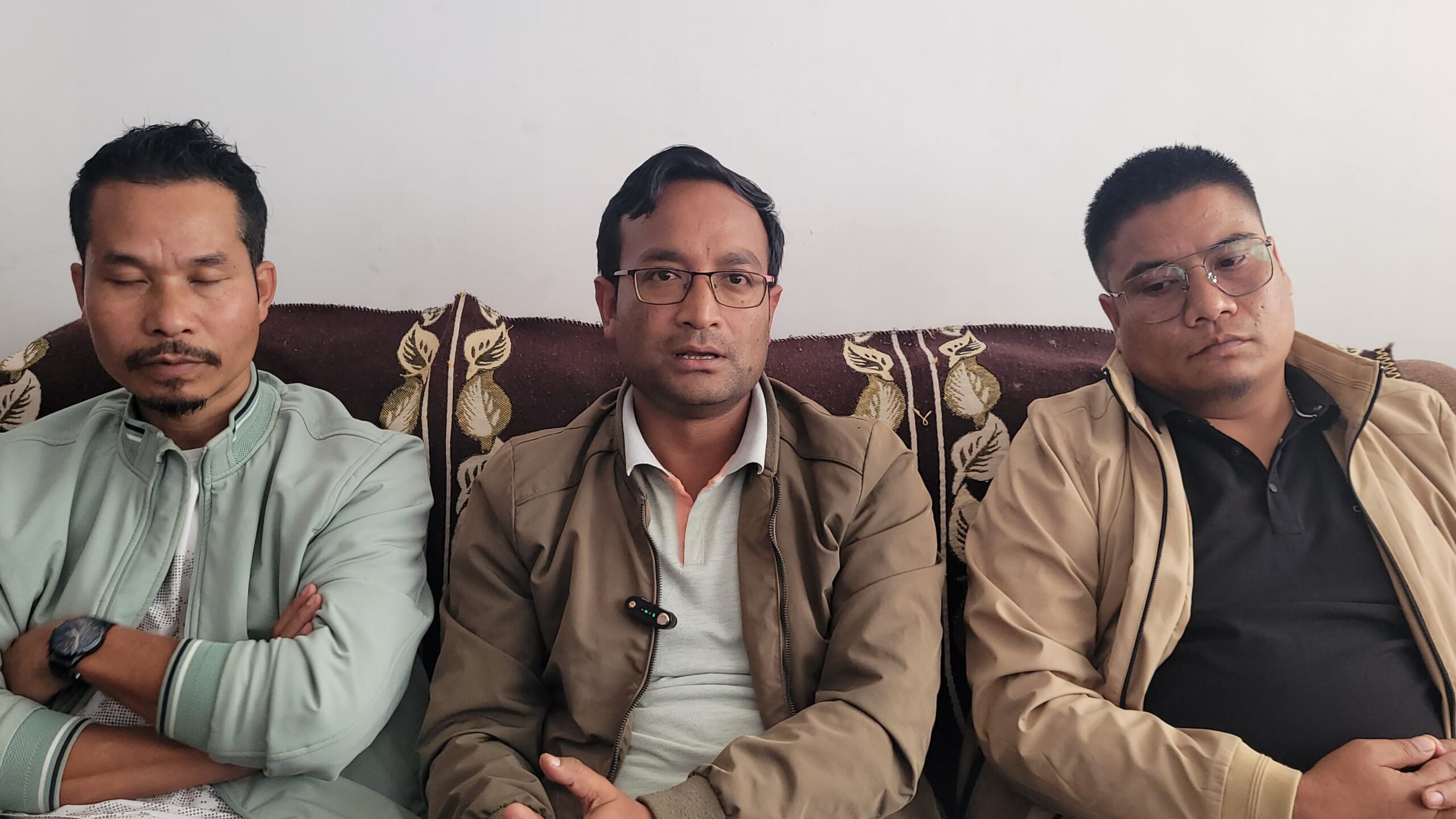
Addressing media persons after an executive committee meeting attended by all constituent organisations, CoMSO chairman Roy Kupar Synrem said the deliberations centred on what he described as urgent structural and demographic challenges confronting Meghalaya.
“Today we had the executive committee meeting of the CoMSO in which all the organisations that are there within CoMSO have attended. The meeting is regarding the discussion and deliberation on two important issues, that is number one, the implementation of the SIR Special Intensive Revision in the state of Meghalaya and the other is the amendment for the modification of the ST order 1950. Last two weeks back, CoMSO have written and send a representation to the Home Ministry, as well as to the Election Commission of India, urging them that the exercise of SIR should be conducted in the state of Meghalaya as soon as possible.”
Flagging what he termed as a growing concern over illegal immigration and its implications on the electoral process, he said, “We have seen what has happened in the last few months in the state, we cannot deny the fact that there is illegal immigration in the state of Meghalaya and these people the illegal infiltrators have not only encroach, have not only settled in the land belonging to the indigenous people, but most of them also have been able to take part in the election process. And this in the long run, will hamper the indigenous tribes of the state.”
Drawing parallels with exercises undertaken in other States, he added, “In that backdrop and as well as we have seen the exercise that have been carried out by the ECI and other states, in states of Bihar, in West Bengal, where they have been able to detect these illegal infiltrators being part of the Electoral process or Electoral roll, we think that Meghalaya also is a fit case for carrying out the SIR in the state Meghalaya.”
Synrem underscored concerns over duplication of voters along inter-State borders. “We cannot deny the fact also that Meghalaya shares Interstate boundary with Assam, there are residents who are settling in the border areas border villages. They are dual voters, they are also voters in Meghalaya, as well as they are voters in Assam. So the purpose of SIR is to purify the Electoral Roll as it has been stated by the Chief Election Commissioner that pure electoral rule is the backbone of democracy.”
On the second issue, CoMSO raised strong objections to the continued application of the ST Order, 1950 in its present form, calling it outdated and inequitable. “If you look at the ST order 1950, you’ll find that for the state of Meghalaya, there are around 53 of 54 Tribes who are recognised Tribes in the state of Meghalaya. This ST order is only copy and pasted from when we were with Assam, same ST order was there. We fail to understand that we have got our own state 50 years now but we are yet to ammend the ST order and this has allowed other tribal communities from other states to have the same rights like us.”
He further highlighted the lack of reciprocity in tribal recognition across States, stating, “If you look in the state of Manipur, there is nothing written that we are the recognised tribes in Manipur. The Khasi Jaintia or the Garos are not recognised tribes in Manipur, of you look at Assam, we are only recognised tribes in the hill areas, not in the plain areas.”
Warning of long-term implications, he said, “So for us, it is not being reciprocated in other states, in other Northeastern states, but for them, they get the same right like the indigenous tribes of Meghalaya. So this is the problem that we are facing and if the ST order is not ammended we will be facing the problem in the near future like what we are facing now these people are buying land here and they are buying land in the heart of Shillong, they are buying land border areas of Ri Bhoi and other parts of Khasi and Jaintia Hills and in Garo Hills.”
Expressing dissatisfaction over delays, he noted, “It is with sadness to say that as per the statement made by the social welfare Minister sometime in the in the in the year 2025 he stated that the state government has only constituted a working group, a committee to study the ST order 1950 way back in the month of December 2024. But we fail to understand that in the almost one and a half years, that committee has done nothing.”
Outlining the course of action, Synrem said CoMSO would formally write to the State government within the week and initiate consultations with political parties. “As per today’s meeting, we will be writing to the state government that within the within a period of 45 days, the state government should be taken up these two mattes in its earnest. And after that the CoMSO will be holding public meetings, and then mobilise people in order to create a movement.”
He added that the first phase would focus on dialogue. “The first phase of our movement will be to engage in dialogue with them, engage in dialogue with the state government and with the political parties, make the stakeholders, and traditional institutions understand about the issues, so that also will take time after that if the state government also not does not respond to our demands. Then CoMSO will take other steps, because we live in the democracy. We always have a right to protest. We have a right for agitation. Those will come after the end of 45 days.”
Reiterating concerns over infiltration, particularly in border regions, he said, “The problem of illegal immigrants are deep rooted we cannot deny the fact that our border area very porus. if you look at the present scenario, what is happening in Garo Hills, we cannot deny the fact that there is huge infiltration that is going on in Garo Hills.”
He further alleged systemic lapses, stating, “The question is how do these people even enroll in the Electoral Roll, who actually bless them to enroll in the Electoral Roll, so we see that this is a deep rooted problem that we are facing as indigenous people.”
Clarifying the organisation’s stand, he added, “We are not saying about everyone, we are not targeting any particular person or any particular group, but for us illegal immigrants is an illegal immigrants.”