
Will 2028 herald the resurgence of regionalism in Meghalaya? Can home-grown political forces reclaim power after nearly two decades of national party dominance? And more critically, will voters who once leaned towards pan-India parties circle back to leadership rooted in local sentiment, tribal identity, and indigenous political ethos?
Meghalaya’s political battleground has long been shaped by coalition compulsions, national narratives, and fleeting regional experiments. Yet, the question of a regional revival is now front and centre. Analysts ask: Is voter fatigue with national parties creating fertile ground for a regional comeback? Can leaders attuned to tribal dynamics, grassroots priorities, and local governance recalibrate Meghalaya’s political compass?
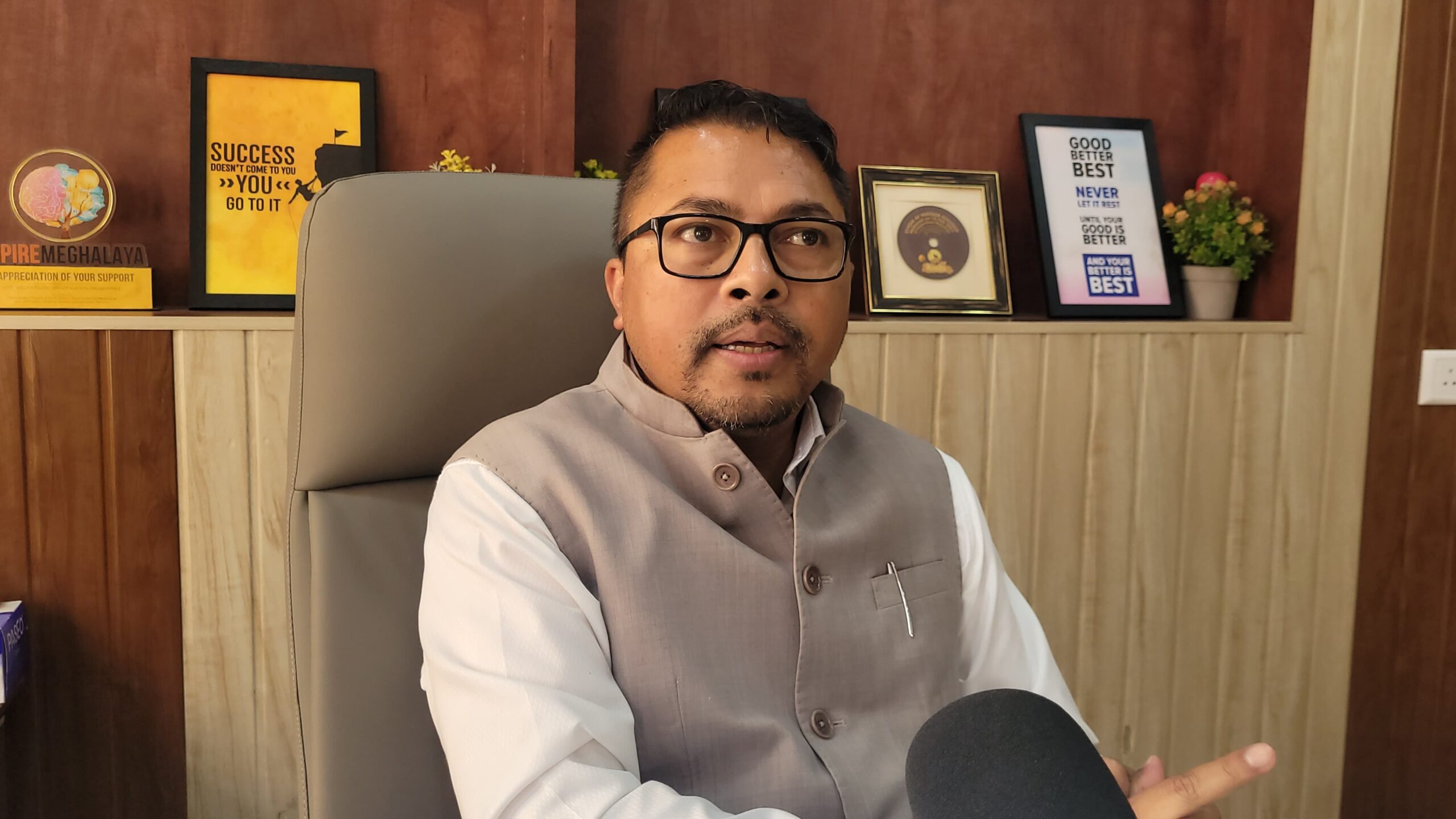
The last time a regional party led Meghalaya was under the late Dr. Donkupar Roy of the United Democratic Party (UDP), heading the Meghalaya Progressive Alliance (MPA), which collapsed after a year—leaving lingering questions about the durability of regional coalitions. Today, UDP President Metbah Lyngdoh exudes confidence, asserting that the party is ready to regain its foothold in the lead-up to 2028. “We are very positive, we are moving into that direction as the regional party, we are very confident,” Lyngdoh said, projecting an unhesitant optimism that hints at a recalibrated political strategy. Reflecting on the party’s trajectory, he added, “If you look at 2018, it is a different scenario—number of seats were less with us— but in 2023 we have doubled the numbers and in 2028, we do expect that we will double the number also by then.” His remarks not only signal the UDP’s electoral ambition but also frame 2028 as a potential tipping point for Meghalaya’s regional resurgence.
It may be mentioned that as the clock is ticking – One North East entity, brings together NPP Chief Conrad Sangma, Tipra Motha founder Pradyot Deb Barma, and other regional actors, is rapidly redefining Meghalaya’s political landscape.
Meanwhile, the Voice of the People’s Party (VOICE) has been making a tangible impact in the Khasi-Jaintia Hills since the 2023 Assembly elections, consolidating its influence further by capturing power in the Khasi Hills Autonomous District Council elections. With these developments, Meghalaya’s political dynamics are witnessing a fresh churn, raising questions about whether regional forces under One North East can truly challenge national party dominance in the run-up to 2028.
The UDP currently has 12 MLAs in the 60-member Meghalaya Legislative Assembly, a numerical base that the party believes can be leveraged into a larger mandate if public sentiment turns favourably. Lyngdoh further asserted, “So we are very positive and I’m sure that definitely the people have realised and seen how to give the regional parties a chance to take the State leadership.”
As national heavyweights BJP and Congress tighten their strategies, the big question remains: Will Meghalaya pivot decisively towards regionalism under One North East, or will the state remain tethered to national political narratives? As Meghalaya inches closer to 2028, the political narrative is shifting. The questions now loom large: Will voters revive the legacy of regional leadership? Can the UDP and other regional forces convert optimism into electoral arithmetic? Or will national parties continue to dominate Meghalaya’s political landscape? The answers may well determine whether the State witnesses a historic homecoming of regionalism—or yet another chapter in coalition-driven political pragmatism.