
In what can be described as a political bloodbath for the Congress in Meghalaya, the party’s leadership is under fire as its legislative strength has collapsed to zero. The state unit now finds itself grappling with an existential crisis, with Meghalaya Pradesh Congress Committee (MPCC) President Vincent Pala facing questions over his inability to prevent the steady desertion of party MLAs.
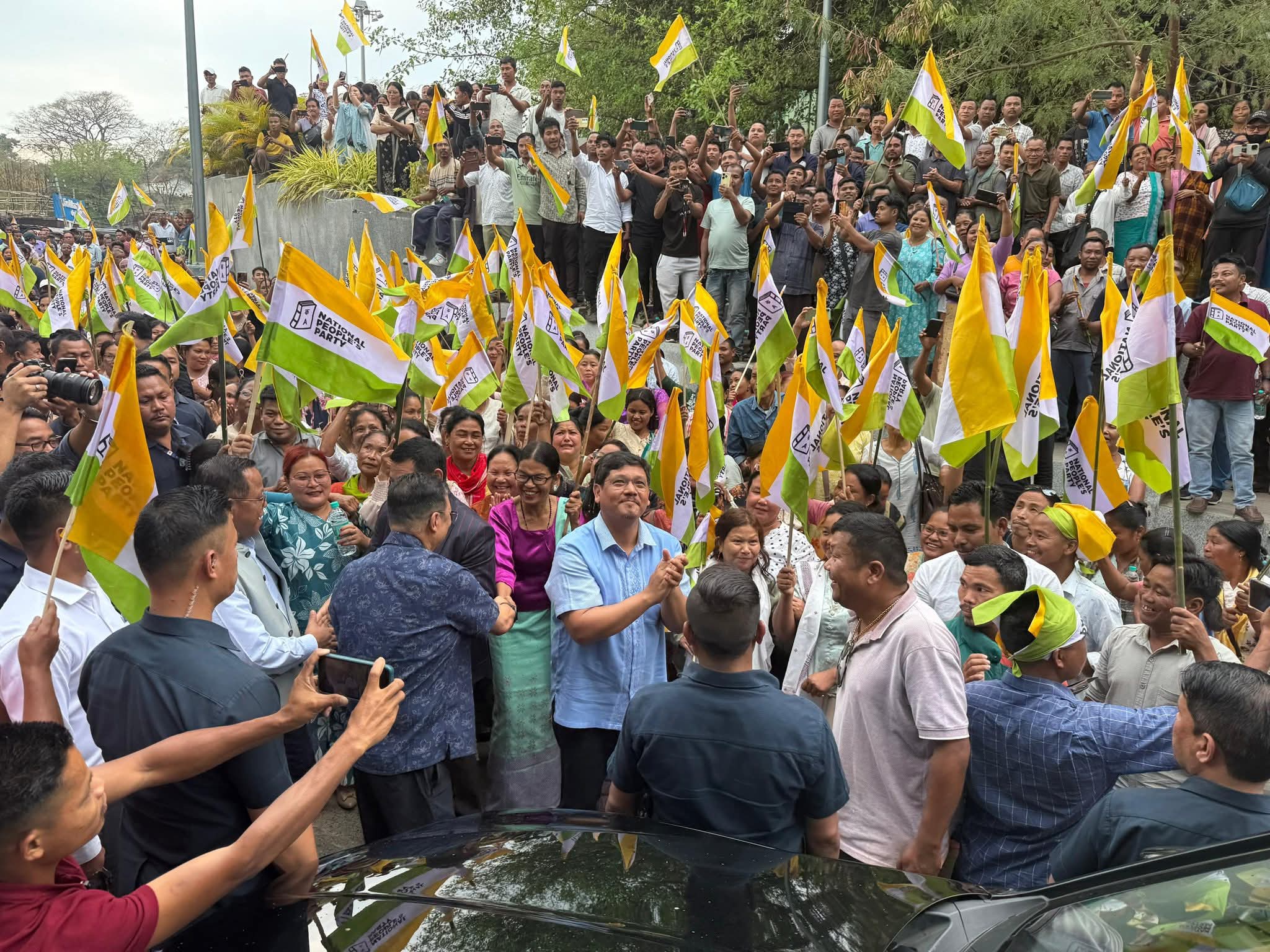
Ever since Pala assumed charge of the MPCC, the party has been in freefall. First, Dr. Mukul Sangma, the Congress Legislature Party leader, defected along with 11 MLAs in a tectonic shift to the Trinamool Congress. The remaining five MLAs were subsequently suspended as they joined the ruling National People’s Party (NPP) led MDA alliance Government, pushing Congress to a position of complete legislative vacuum.
Despite this political haemorrhage, the MPCC Working President Deborah C. Marak remains defiant. “Congress is not a sinking ship, let people talk. If that is so, what did we win the Tura Lok Sabha seat for—without Congress MLAs, without Congress MDCs? Who made the leaders? The public. The people,” Marak asserted.
Slamming the narrative that Congress lacks leadership, she retorted, “When people will vote for Congress, definitely there will be power, there will be a leader. When you take the responsibility, you are a leader. There are many Congress leaders. Do you think only when you become a Chief Minister, Minister, when you hold power or money power, that time only you call yourself a leader? No.”
She further added, “You cannot even pay one month’s salary for the District Council. Will you call yourself a leader? When you say that the Congress doesn’t have a leader, there are many leaders in the party. Yes, Congress—we are not in the position to run the government, that is why people are looking at us that way. No, it is wrong. We don’t say we don’t have a leader. It is politics—sometimes up, sometimes down.”
When asked to address the exodus of MLAs, Marak offered a pragmatic take, distancing the leadership from blame. “This time we couldn’t form our own government. We couldn’t win enough seats to form the government. For that reason, for their personal reasons, MLAs are going away and joining NPP. They want to be in the government. They are leaving for their personal interest and nothing else because we couldn’t form the government and they don’t want to stay in the opposition. It is their personal decision,” she said.
Rejecting the idea that Pala’s leadership alone is responsible, she stated, “If you ask the competency of the president because only the legislators are leaving the party, I will say no. What can the president alone do? In politics, in party activities, we also equally—we are responsible. All of us, we were all equally responsible. You cannot say because of the president alone, everybody is leaving. It is wrong. President alone cannot do anything. We are equally responsible when we are rebuilding and restructuring the party.”
On the speculation that the Congress debacle stems from an ego clash between Vincent Pala and Dr. Mukul Sangma, Marak declined to wade into the controversy, stating, “No comment.”
Amid reports that TMC state president Charles Pyngrope and former TMC vice-president George B Lyngdoh may return to the Congress fold, Marak maintained caution. “Official letter we have not got. We also—we just information from media, rumours going around, but official indication is not there. No official letter is not there with the party. I also—I heard, but maybe it’s a rumour. The door of the Congress is open. The more they come, more marrier to the party,” she remarked.
While admitting she remains in touch with former and sitting legislators, Marak clarified that her communication is not aimed at engineering defections. “I am in touch with ex-MLAs and sitting MLAs but not to bring them back. I am in touch in friendly terms.”
In a state where the Congress once enjoyed unshakable dominance, its current decimation to a leaderless camp without MLAs signifies a dramatic fall from grace. Whether the grand old party can rebuild from the grassroots or fade into political irrelevance will depend not just on rhetoric but on its ability to inspire public confidence in a changing electoral landscape.