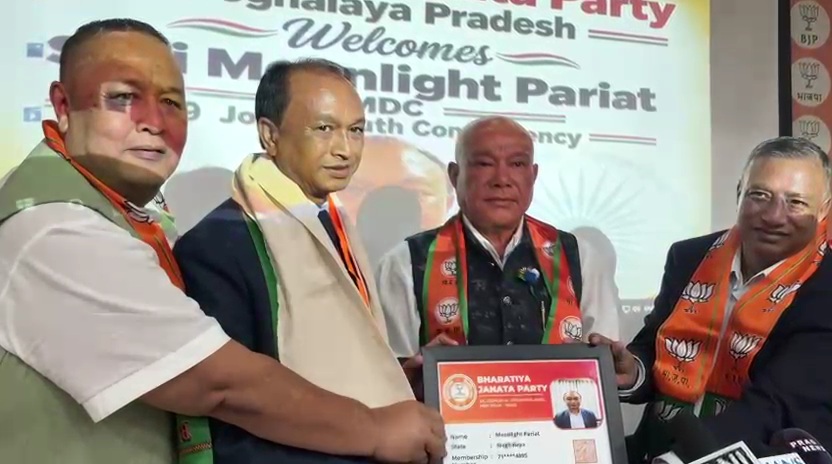
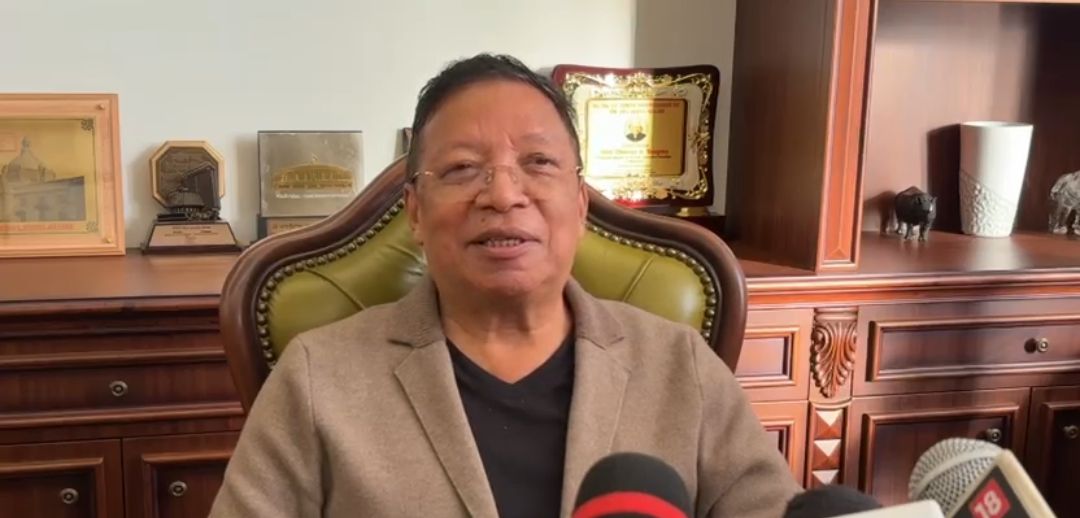
As negotiations reportedly continue to bring three more United Democratic Party (UDP) MLAs into the National People’s Party (NPP), all eyes are on Meghalaya Legislative Assembly Speaker Thomas A. Sangma and his pending decision on the proposed merger of eight former UDP legislators with the Bharatiya Janata Party (BJP). NPP leaders and the remaining UDP MLAs are closely monitoring the proceedings, with the Speaker awaiting legal opinions before deciding whether to recognise the merger. The eight legislators submitted their merger letter on September 25, after joining the BJP in New Delhi on September 23. NPP sources said UDP MLA Nijorki Sungoh was unwell. Whether negotiations to bring the remaining three UDP MLAs into the NPP will culminate in a merger next week remains uncertain, with political discussions continuing.
The Speaker’s decision could determine the political future of the eight former UDP legislators who joined the BJP and shape the options available to the four MLAs who remain with the regional party. The BJP’s strength in the Meghalaya Assembly has risen from two to 10 following the eight legislators’ move. Meanwhile, the NPP is reportedly trying to bring three of the four remaining UDP MLAs into its fold, potentially reshaping the ruling Meghalaya Democratic Alliance. Senior UDP leader and West Shillong MLA Paul Lyngdoh said on Wednesday that the party’s next move depended on whether the Speaker recognized or rejected the split. He stressed that the remaining legislators could not make their political choices without considering the legal consequences.
“The entire course of action depends on whether the Speaker entertains and recognises the split. In the current dispensation, we have a situation where there is a split in the UDP,” Lyngdoh said.
He explained that if the Speaker rejected the split, the UDP would continue to have 12 legislators, leaving him unable to leave the party without risking disqualification. If the Speaker recognized the split, the regional party would be left with four MLAs. Their next steps, including whether they remained with the UDP or moved elsewhere, would depend on the ruling and the requirements of the anti-defection law.
“If he does not recognise the split, it means UDP remains 12 and I can’t leave. If the Speaker does entertain it, it leaves us with 4,” Lyngdoh stated.
Lyngdoh said the remaining legislators would have to assess their options after the Speaker decided whether to entertain or reject the petition concerning the eight MLAs. Any subsequent move to another party would have to meet the requirements of the Tenth Schedule, including the conditions governing protection from disqualification. He described speculation about the remaining four MLAs moving together or individually as premature.
“You are putting a very hypothetical question. We will have to wait and see what happens to the petition of the 8, whether it is entertained or rejected. Then the next course of action would be taken by the 4, whether they stick with UDP or move out. If they move out, they will need sufficient numbers to warrant a majority in sync with the provisions of the Tenth Schedule,” he said.
Dismissing reports that three of the four remaining UDP MLAs were preparing to join the NPP, Lyngdoh said political inclination alone could not determine their future. He pointed out that even if an MLA wanted to join another party, the law could prevent that move if the Speaker did not recognize the split. An individual departure could expose the legislator to disqualification under the anti-defection provisions.
“Inclination will not determine our course of action, but what actually happens on the ground will. Suppose I am inclined to join CPIM, what happens to my inclination if the 8 are told no, you stay with UDP, this split is not recognised? Even if I wish to join any party, will the law allow me? Does it mean I expose myself to disqualification as an MLA because Bah Paul on his own has joined Congress, CPM or BJP?” he said.
At the heart of the dispute is a constitutional question: can a group of legislators claim protection under the merger exception to the anti-defection law without the original political party itself merging with another party?
Paragraph 4 of the Tenth Schedule of the Constitution provides protection from disqualification in qualifying merger cases, subject to specific conditions, including the agreement of at least two-thirds of the members of the legislature party. In the UDP’s case, eight of its 12 MLAs meet that numerical threshold. However, meeting the two-thirds requirement does not, by itself, establish that all constitutional conditions for a merger have been fulfilled.
The Supreme Court’s 2023 judgment in Subhash Desai v. Principal Secretary, Governor of Maharashtra examined the distinction between an original political party and its legislature party under the Tenth Schedule. The two cannot simply be treated as interchangeable. The Speaker must therefore consider whether the proposed merger meets the constitutional requirements for protection under Paragraph 4, rather than relying solely on the number of legislators involved.
With the Speaker awaiting legal opinions and political negotiations continuing, the ruling could determine whether the eight former UDP MLAs can retain their Assembly seats as BJP members or face possible disqualification. It could also shape the political future of the remaining UDP legislators and alter the balance within the ruling coalition. Until the Speaker delivers his decision, the legal status of the proposed merger and the possibility of further movement from the UDP to the NPP remain unresolved.