
Exclusive
Amid sustained scrutiny over air pollution in the Byrnihat industrial belt straddling the Assam–Meghalaya border, and with the Assam Government yet to respond to Meghalaya’s formal proposal for a coordination-cum-joint action committee, concerns over pollution in the region continue to mount. The Meghalaya Government has moved to institutionalise a joint mechanism to monitor and mitigate pollution in Byrnihat, even as official data places the Air Quality Index (AQI) in the “moderate” category.
Situated along a sensitive inter-state industrial corridor, Byrnihat has repeatedly figured in national pollution narratives, but Meghalaya authorities insist that sustained regulatory interventions have resulted in a tangible improvement in air quality, bringing levels down from “poor” to “moderate,” notwithstanding reports pointing to higher pollution on the Assam side.
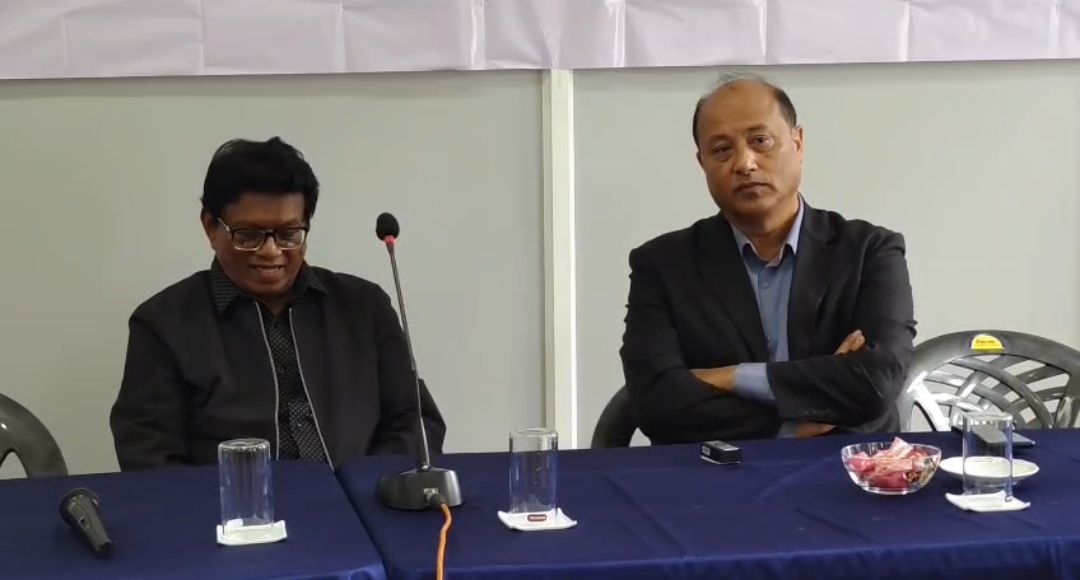
Confirming the initiative, Meghalaya State Pollution Control Board (MSPCB) Chairman R. Nainamalai said the State Government has already initiated formal communication with Assam to set up a joint platform for coordinated action.
He said, “From the Government side initiative were taken, our CM has written a letter to his counterpart in Assam with a plan to establish joint action cum coordination committee to regularly see the pollution status and also how to mitigate. The committee we have sent govt of Assam, still we have not received nomination from them, once they send the nomination, the committee will be constituted and that will be in action.” He underlined that the absence of a response from Assam has delayed the operationalisation of the proposed committee, which is aimed at ensuring real-time, coordinated monitoring across the border.
Addressing concerns raised under the National Clean Air Programme (NCAP), including findings by the Centre for Research on Energy and Clean Air (CREA), Nainamalai said official monitoring from the Meghalaya side continues to classify Byrnihat’s air quality as moderate. He stated that the current AQI in Byrnihat stands at 130, which falls within the moderate range and can be verified through the SAMEER application of the Central Pollution Control Board, which provides real-time AQI data and public advisories. He added that Meghalaya has established its own air quality monitoring system in Byrnihat, while an Assam-side station is already operational and linked to the SAMEER app, with both systems reflecting similar readings. In addition, Meghalaya operates four manual air quality monitoring stations in the Byrnihat area, all of which also indicate moderate air quality levels.
The MSPCB chairman said that based on compiled data, the cumulative AQI for Byrnihat over the last calendar year stood at 103, and for 2025 as well, the consolidated AQI figure remains 103. Stressing that AQI values between 100 and 200 are categorised as moderate, he said the present status does not point to severe pollution. He attributed the improvement to consistent enforcement measures, including mandatory installation of continuous air quality monitoring systems by industries, frequent inspections, issuance of closure notices, and imposition of environmental compensation for violations. He noted that Byrnihat, once projected as among the most polluted industrial belts in the country, has now been brought down to the moderate category.
Responding to the CREA report which stated that Byrnihat recorded an annual average PM2.5 concentration of 100 micrograms per cubic metre in 2025, well above national standards, Nainamalai said, “From Meghalaya side as per the report from Byrnihat confirming Air Quality Index as Moderate. However, the data, this is based on Byrnihat from Assam side. May be it’s not pertaining to Meghalaya.” He added that while there were one or two instances in the past six months when air quality briefly slipped into the poor category due to specific reasons, the situation has since improved substantially.
Reiterating the regulatory role of the pollution control board, he said continuous monitoring is essential to identify violations and initiate timely action.
He explained that inspection teams regularly visit industrial units, issue show-cause notices when violations are detected, and impose compensation in cases of major non-compliance. Highlighting the inter-state dimension of the issue, he said that while Meghalaya has taken strict action against industries on its side, similar measures from Assam are necessary for effective mitigation, as pollution in the border area is influenced by industrial activity from both states.
Detailing the industrial profile of the Byrnihat region, the MSPCB chairman said a total of 80 industries are operating in the area, with 41 located on the Meghalaya side and 39 on the Assam side. Among the Assam-based industries, 20 fall under the Red Category, 15 under Orange, and four under Green. On the Meghalaya side, six industries are categorised as Red, 21 as Orange, and 14 as Green, with one of the Red Category units already closed. He maintained that a coordinated and equally stringent approach by both states remains critical to sustaining and further improving air quality in Byrnihat, reiterating that Meghalaya is awaiting the Assam Government’s response to activate the proposed joint action committee.