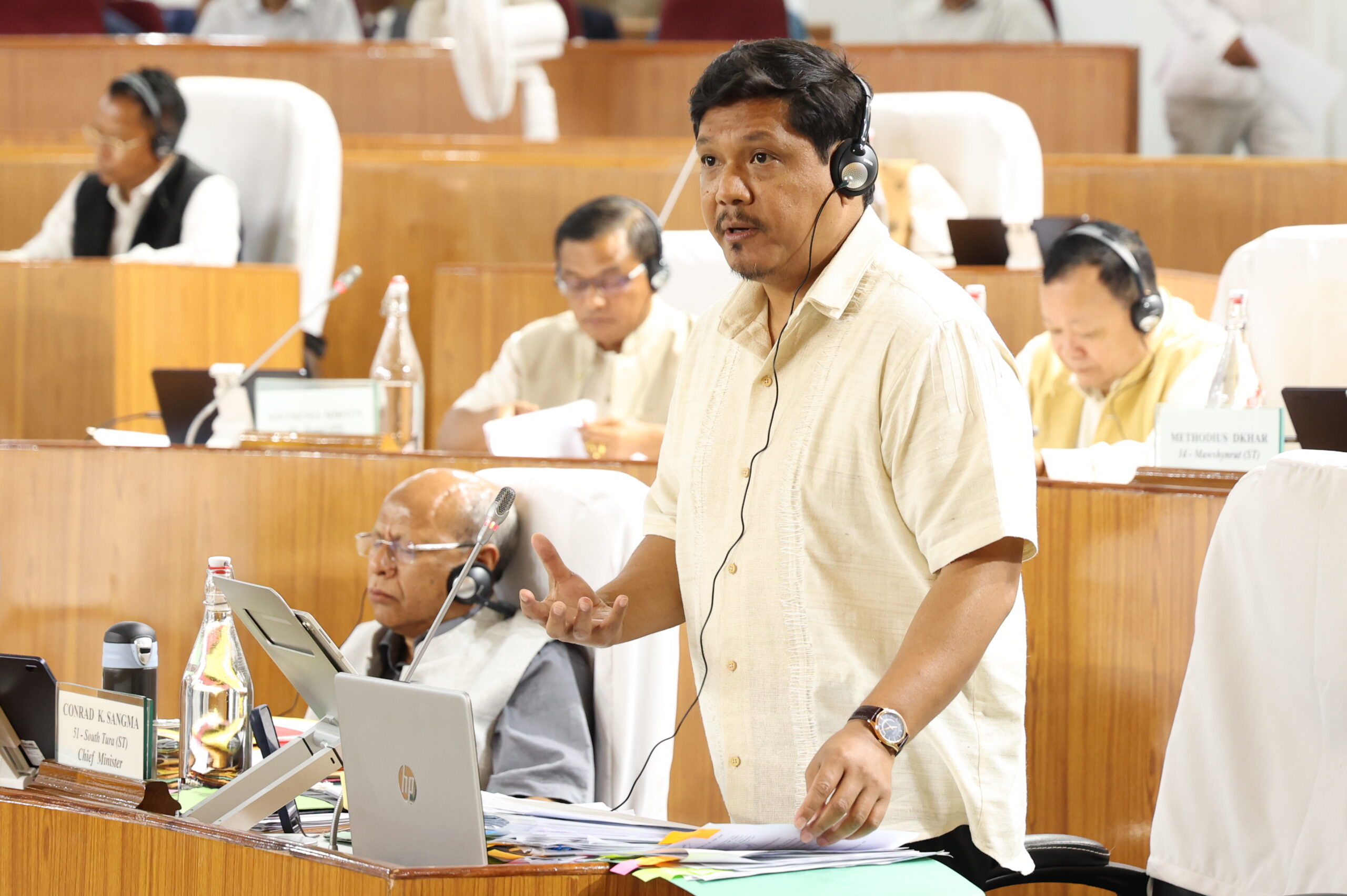

Dressed in a striking Garo traditional jacket crafted from a blend of Eri silk and pineapple leaf fibre, celebrated Bollywood actor, producer, and writer Ashutosh Rana on Sunday unveiled the poster of the National Conclave on “Weaving India Together: Natural Fibres, Innovation and Livelihoods from the North East and Beyond” at Hotel Eros, Nehru Place, New Delhi.
Speaking to media persons, Rana expressed his admiration for India’s indigenous handloom traditions and his emotional connection with the North East’s craftsmanship. “I am wearing this Garo traditional jacket for this programme, and I must say it’s an honour to represent the rich weaving culture of the region,” he said. He further added, “I will surely visit the Central Agricultural University, Imphal (Tura). If there is any project, I will definitely take it up.”
Emphasizing the need to preserve the nation’s weaving legacy in the face of mechanization, Rana remarked, “Hand weaving and handlooms are fading today — we are too influenced by machines. The initiative by the Central Agricultural University, Imphal, is splendid because, in this machine age, you are increasing the value of handwoven art. I believe humans can build machines, but machines cannot build humans — machines cannot create humanity.”
India stands as the world’s largest producer of cotton and jute, the second-largest producer of silk, and a global hub for handlooms and handicrafts. Beyond these mainstream fibres, the North Eastern region nurtures several unique natural fibres—Eri, Muga, Ramie, Banana, and Nettle—that seamlessly combine ecological sustainability with cultural heritage. These fibres, though niche, are increasingly attracting global attention for their potential in sustainable fashion, meditech, geotextiles, and home furnishings, reflecting the true spirit of India’s circular economy.
With the global demand for eco-friendly textiles projected to exceed USD 10 billion within the next decade, India stands at the cusp of a fibre revolution. Supported by initiatives such as Vocal for Local, Atma Nirbhar Bharat, and PM MITRA Parks, the country is poised to emerge as a global hub for sustainable fibre innovation, entrepreneurship, and exports.
The upcoming National Conclave—organized by the Central Agricultural University, Imphal (College of Community Science, Tura, Meghalaya) in collaboration with the Government of Meghalaya, Indian Council of Agricultural Research (ICAR), Ministry of Textiles, and Deendayal Research Institute (DRI)—aims to create a cohesive platform connecting innovation, livelihoods, and traditional knowledge.
The event will showcase India’s indigenous fibre ecosystem through exhibitions, discussions, and a National Ideathon, which has already drawn 47 innovative startup ideas from across the country, with ten finalists selected for presentation. Over 275 delegates, including 75–100 artisans, weavers, and entrepreneurs, are expected to participate, reflecting the growing enthusiasm around sustainable fibre-based livelihoods.
A strong emphasis will also be placed on women’s empowerment, recognizing that weaving and fibre-based enterprises not only sustain rural and tribal livelihoods but also preserve cultural continuity and provide dignity of work. The conclave envisions these initiatives as more than economic ventures—they are pathways toward enhancing happiness, life satisfaction, and sustainable living.
Among the distinguished guests at the poster unveiling were Dr. Mridula Thakur Pradhan, Chairperson of the Vikas Foundation Trust and Patron of the National Conclave; Dr. Rajbir Singh, DDG (Agricultural Extension); Atul Jain, Vice Chairman of DRI, New Delhi; and Dr. Anupam Mishra, Vice Chancellor of the Central Agricultural University, Imphal.
The conclave’s message resonated deeply with Rana’s words—an artist and a nation alike thrive when tradition and innovation weave together.