
’
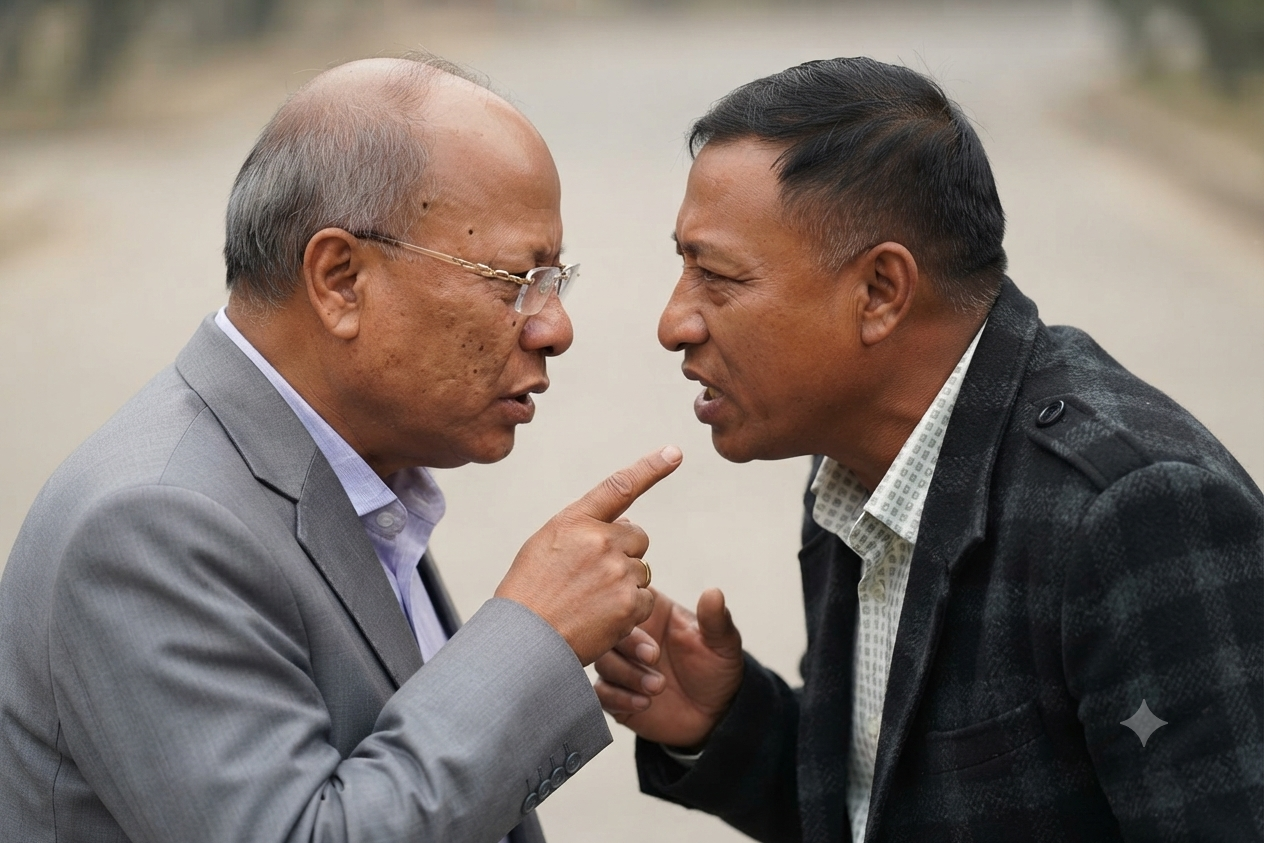
Meghalaya NPP State president Prestone Tynsong on Thursday tutored senior BJP legislator A.L. Hek on the hierarchy of political authority, making a pointed distinction between an MLA and the State president of a political party and stressing that Hek is “only an MLA” and not the State president of the BJP. Tynsong’s sharp response came after Hek claimed that several NPP MLAs wanted to join the BJP, turning a claim about a possible political exodus into an unusually personal contest over who has the authority to speak for a party. Rather than merely dismissing the allegation, Tynsong directed Hek back to the BJP’s organisational hierarchy, saying he would comment if the State president of the BJP made the claim — a response that effectively questioned whether Hek’s statement represented the BJP’s official position or simply his own assessment.
“May be if the state president of BJP says something, then may be I can comment,” Tynsong said.
The remark was a pointed political snub. Hek, despite being a senior BJP legislator, does not occupy the post of State president of the BJP, Tynsong stressed. The NPP State president’s response therefore shifted the controversy from the alleged movement of NPP MLAs to a more basic question of political hierarchy: who actually has the authority to speak for the BJP on an issue involving another party’s legislators?
Tynsong then turned the same organisational logic back on Hek while rejecting his claim about the NPP.
“That is the view of AL Hek but I don’t think Hek is the state president of NPP, I am the state president of NPP. I think I know better than anybody else. Let me just tell you one thing, we are united, all 33 elected MLAs of the NPP are intact. As of now I don’t see any rift at all.”
The statement “I don’t think Hek is the state president of NPP, I am the state president of NPP” became the sharpest political barb in Tynsong’s response. In effect, he suggested that if the BJP legislator was claiming to know which NPP MLAs were preparing to cross over, then the person with direct organisational responsibility for the NPP might reasonably claim to know its internal condition better.
The exchange also gave Tynsong an opportunity to publicly assert that the NPP remains intact, directly challenging the narrative created by Hek’s claim. According to Tynsong, all 33 elected NPP MLAs remain together and he sees no rift within the party.
The political significance of the exchange lies in the competing narratives being projected. Hek’s assertion raises the possibility of movement from the ruling party towards the BJP; Tynsong’s response seeks to neutralise that suggestion by insisting that there is no visible fracture within the NPP. Neither claim, however, changes the fact that the controversy has now moved beyond the question of possible defections to a public dispute over political authority.
Tynsong also took aim at the role of social media in amplifying political claims, warning against treating online commentary as established fact.
“I don’t believe in comments, I believe in reality. Please when you ask me a question, ask the reality, don’t depend on this social media, that is not at all the gospel truth.”
The remark adds another layer to the political confrontation. Tynsong’s argument is that political speculation should not be allowed to substitute for evidence of an actual split, while his repeated reference to party presidents suggests that formal organisational authority should matter when sweeping claims about political realignment are made.
For now, the controversy rests on two sharply different claims: Hek says several NPP MLAs want to join the BJP; Tynsong says all 33 NPP legislators are intact and that he sees no rift. But Tynsong has also made the dispute personal by questioning Hek’s standing to speak for the BJP and asserting his own authority as NPP State president.
The political message from Tynsong was therefore unmistakable: if the BJP State president speaks, he will respond; until then, Hek’s claim remains the statement of an individual legislator. And in the most pointed line of the exchange, Tynsong reduced Hek’s organisational standing to four words: “He is only an MLA.”


