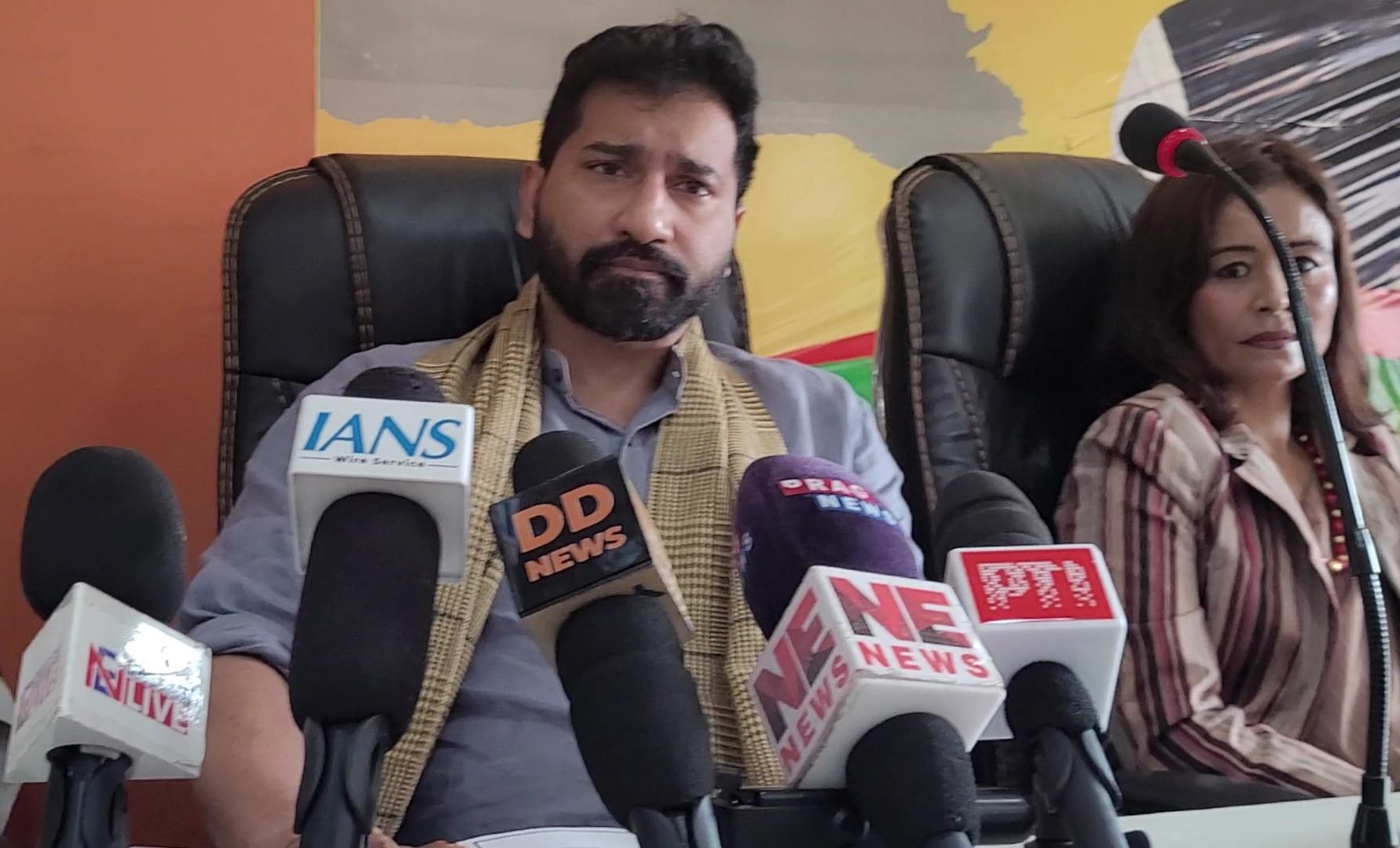

TIPRA Motha founder Pradyot Bikram Manikya Deb Barma asserted that indigenous regional forces are “amalgamating, not merging,” signalling a strategic consolidation to confront long-ignored issues such as Inner Line Permit (ILP), illegal migration and land rights. He stressed that the move seeks to fortify regional identity and prevent national parties from exploiting deep-rooted tribal, ethnic and religious divisions across the Northeast.
Deb Barma said, “You can call it amalgamate, amalgamate is the better word. I think, instead of calling it, the word merger, I think amalgamate is better because you take something out of me. I think amalgamation is the better word than merger as we do not want to destroy each other’s distinct identity.” Emphasising that discussions on the proposed political entity remain internal, he added, “The name is not discussed in public domain we are going to come up with proper entity, we will do it in a measured and balanced way, the name is not important as the people.”
Slamming the political class for sidelining core concerns, he questioned the absence of debate on issues at the heart of regional anxieties. “The people’s issue has to be dealt with, whether it is inner line permit, or whether it is illegal migration from Bangladesh or for other neighbouring countries, whether it is about land rights, whether it is about what we do with our next generation,” he said.
Warning that internal fragmentation continues to weaken the region’s influence in national policymaking, he added, “If you go to Delhi, does anyone know who’s from Meghalaya or Tripura? Who’s from Nagaland, who’s from Manipur? They all call us by Northeasterners or chinkies, or sometimes momos or Nepalese. But when we come back to our home, we’ve become divided as Hindu, and Christians… Garos and Khasis, Meiteis and Kukis. That is unfortunate… If we have to negotiate with Delhi, you have to do it from a position of strength.”
Cautioning the region about the 2026 delimitation, he said the silence around the likely shrinkage of the Northeast’s parliamentary representation reflects national apathy. “After 2026? What will be our share in the parliament? When North India will get 100 MPs and South India will get 50 MPs. How much will our share go up? All these things are questions which media should ask but you are only asking questions because it is convenient right now.”
Deb Barma also criticised both Congress and BJP for decades of ignoring the region’s demands. “It’s not just this Centre, when Congress was in Centre even they didn’t pay attention to us. When a Chief Minister from North East goes and has to wait for 10 days to get an appointment, is it fair… where is the self-respect gone?” He stressed that the ILP issue must not be confined to one state. “When it comes to implementation of Inner Line Permit it’s not only in Meghalaya, even in Tripura when we are all one centre better pay attention to us.”
Calling for a united front, he said, “If we are one they better give us appointment. They better listen to us or the people will answer. Our people want us to be strong… even a poor kuwai seller in Motphran has self respect and we need to speak for them as well as we are talking about other people.”
It may be mentioned that a coalition of influential regional leaders on Tuesday unveiled an audacious plan to form a singular political entity under the banner “One North East.” The move, described by its architects as “historic” and “collective,” signals an attempt to rewrite the power equations of the region’s fragmented political landscape. The signatories include Meghalaya Chief Minister and NPP chief Conrad K. Sangma, TIPRA Motha founder Pradyot Bikram Manikya Deb Barma, former Nagaland minister Mmhonlumo Kikon, and Assam’s Daniel Langthasa, founder of the People’s Party. Together, they envision a reimagined Northeast—one that transcends state borders to forge an indigenous political powerhouse. The leaders have decided to constitute a committee that will deliberate on the future course of action, including the modalities and structure of the proposed political entity. The committee on November 4th is given 45 days to submit its report.