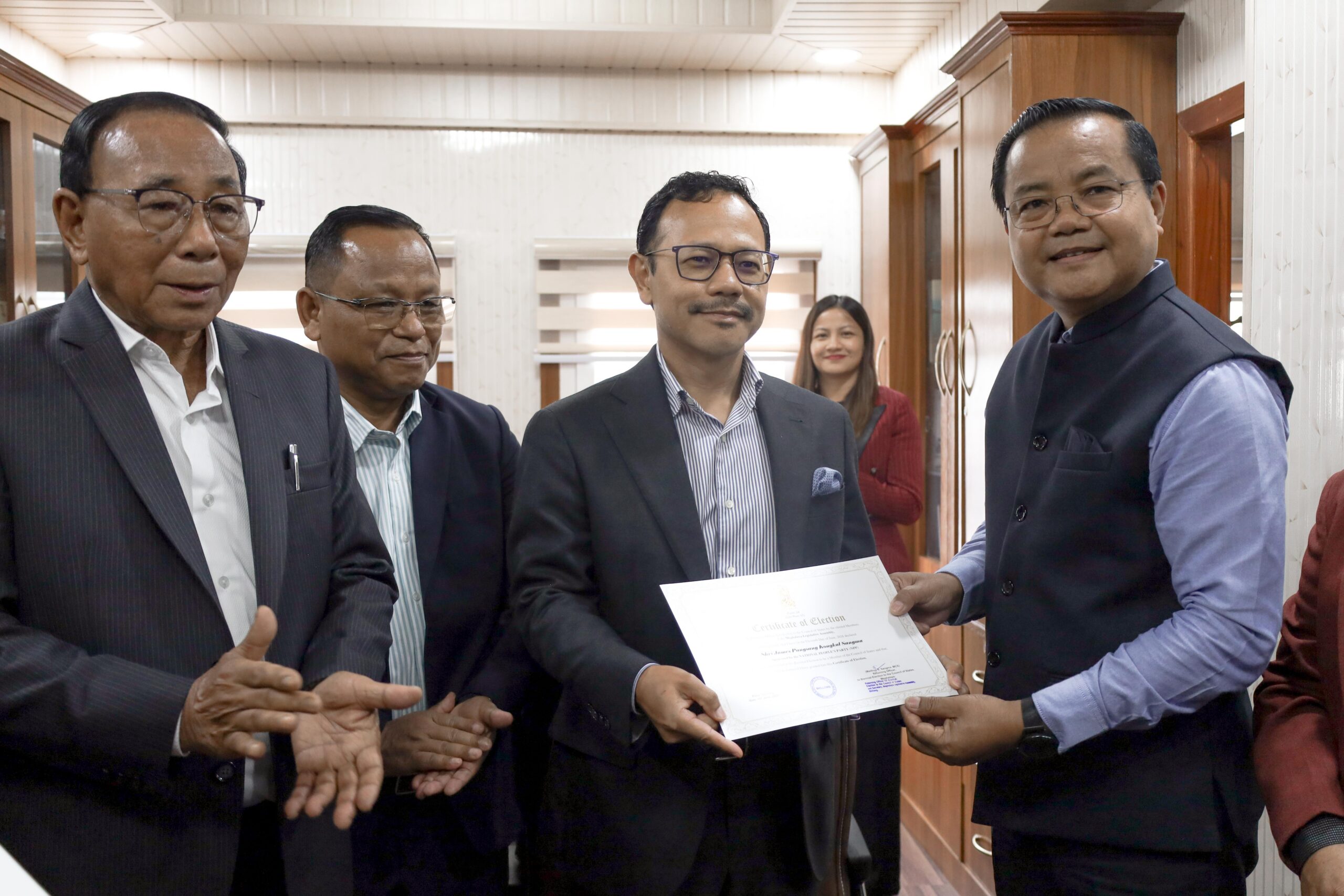
Meghalaya Democratic Alliance nominee and National People’s Party leader James Sangma was on Thursday formally declared elected unopposed to the Rajya Sabha from Meghalaya after the nomination withdrawal deadline ended without any contest, securing his entry into the Upper House of Parliament.
Following the issuance of his election certificate by the Returning Officer, Sangma said he would work to ensure that key resolutions passed by the Meghalaya Legislative Assembly, particularly the demand for the Inner Line Permit (ILP), are strongly represented in the Rajya Sabha.
Describing his election as a significant responsibility, he pointed to the limited representation of the North East in Parliament and stressed the need for stronger articulation of regional concerns at the national level.
“I feel deeply humbled, I feel honoured to shouldering the responsibility because of less number of MPs from North East but I believe that assistance, patience, is will need to ensure to have that in plenty and press for more times be alloted because specially because there are many many issues not just in Meghalaya but in the entire region in North East,” Sangma said.
He reiterated that pursuing the ILP demand would remain one of his foremost priorities.
“Inner line permit issue is an issue which has been passed in the Meghalaya Legislative Assembly as a resolution it is my bounden duty as a representative of the state to carry forward that resolution so that it found a voice in the halls of the Rajya Sabha, yes I will be persuing this matter (ILP),” he said.
The ILP demand continues to be a major political issue in Meghalaya, with various organisations and political parties seeking its implementation to regulate the entry of outsiders and protect the interests of indigenous communities.
Sangma also said he would raise the demand for inclusion of Khasi and Garo languages in the Eighth Schedule of the Constitution, a move long advocated to strengthen linguistic recognition and institutional support for the state’s major indigenous languages.
His election comes at a time when issues of indigenous identity, constitutional safeguards, and regional development remain central to Meghalaya’s political discourse, with ILP and language recognition expected to feature prominently in his parliamentary agenda.
NPP Leader James Sangma elected unopposed to Rajya Sabha, pledges push for ILP and regional issues