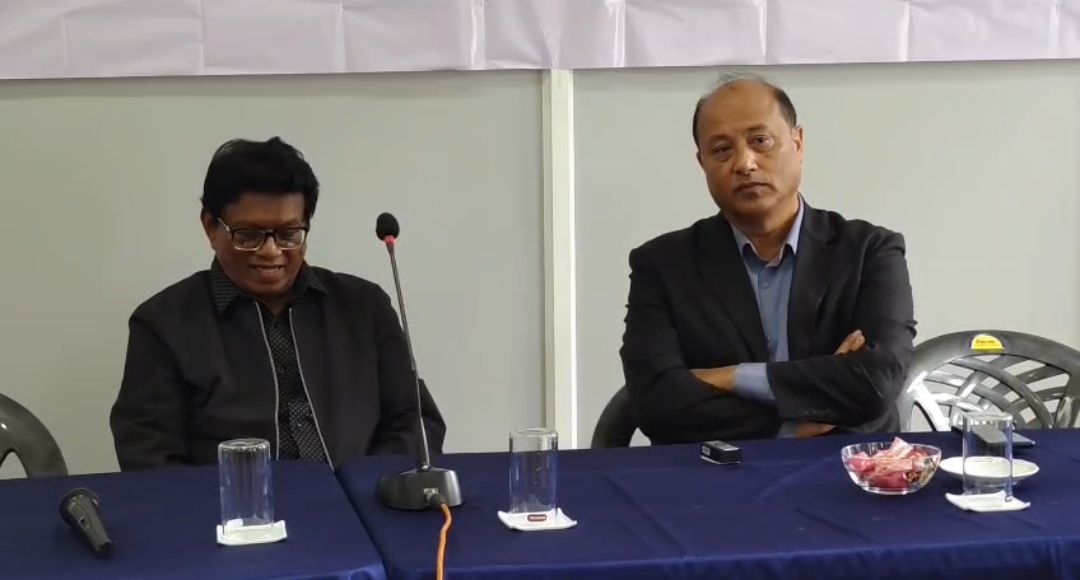

The shifting sands of South Asia’s geopolitical theatre have cast a shadow over India’s eastern flank, with Bangladesh’s unprecedented decision to grant visa-free entry to Pakistani officials triggering alarms across the strategic and security establishment. Leader of Opposition in Meghalaya Legislative Assembly and former Chief Minister Dr Mukul Sangma has sounded a stark warning, flagging the move as a matter of “grave concern” with potential ramifications on national security, particularly in the vulnerable North East which shares long, porous borders with Bangladesh and Myanmar.
“More importantly, when you have challenges in your own neighbourhood from the geopolitical perspective and now you have the reason to be more alert and more vigilant and we need to probably further strengthen our whole input collection mechanism, the mechanism of our vigilance, supervision, so that we are able to insulate the reason from the likely foreseeable and unforeseeable challenges pertaining to the internal security,” Dr Sangma said, underscoring the urgent need for robust intelligence coordination and constant surveillance.
He drew pointed attention to Bangladesh’s recent policy shift, under which holders of Pakistani diplomatic and official passports will be allowed visa-free or visa-on-arrival entry for the first time since 1971. “You are aware of the fact that Bangladesh have embarked upon some new policies wherein they are now opened up as far as the visa in arrival or visa free visit to Bangladesh to Pakistani National, you are aware of that. So Bangladesh has embarked upon a new policy of allowing certain nationals, particularly Pakistani nationals, to visit Bangladesh free from visa or visa on arrival. So these are somehow areas of concern and Government of India I’m sure is definitely aware of the situation and somehow have activated the system to see whether it will have any ramification on the overall geopolitical situation. And I’m sure the overall robust system that Government of India has will be able to somehow address these concerns,” he remarked.
Highlighting the geopolitical compulsions of geography, Dr Sangma invoked Meghalaya’s frontline exposure. “And then Meghalaya with Bangladesh as our neighbour, earlier yes as I said we were friendly neighbour, but then now, we need to be vigilant and we also need to be vigilant as to how things are unfolding in the neighbourhood, because you’re in the same neighborhood. You cannot change your neighbours, whether you have a good neighbour or bad neighbour but you cannot change your neighbour, so, therefore, what is required to be done from that context is the sole responsibility of the government.”
The former Chief Minister cautioned against historical complacency, reminding that Meghalaya has often been exploited as a sanctuary and transit corridor for inimical forces. “Meghalaya has always been vulnerable, Meghalaya has been used as a safe heaven. Meghalaya has been used as a corridor, even Shillong was used as a safe heaven once upon a time, it is not longer atleast till 2018, now wheather it is becoming again or not that is upto the government to verify and find out,” he stated, insisting that every intelligence input must be treated with utmost seriousness.
Reflecting on the shifting neighbourhood calculus, Dr Sangma remarked, “Meghalaya has such a long border in as far as the Indo-Bangla border and at the same time, we were privileged to have a friendly government in Bangladesh for a reasonable period of time and that helped the whole North East including Meghalaya. But today, from the geopolitical perspective, things have changed. And therefore we have to be more vigilant, more alert, and we have to see that there is proper integration in as far as sharing of inputs are concerned. There’s a robust mechanism of input collection both by the agencies, under the Government of India and agencies under the state government. It is, we don’t work in silos because anything connected with internal security is the matter of concern of both the states and the union government.”
Issuing a grim reminder of past cross-border adventurism, Dr Sangma said, “You have seen mis-adventurism of the anti-India forces in the past. You have seen the Mumbai attack, how they reached Mumbai. It’s not so easy and how they have identified the areas which they attack, they were almost like pin point accuracy they reach those areas of their target.”