

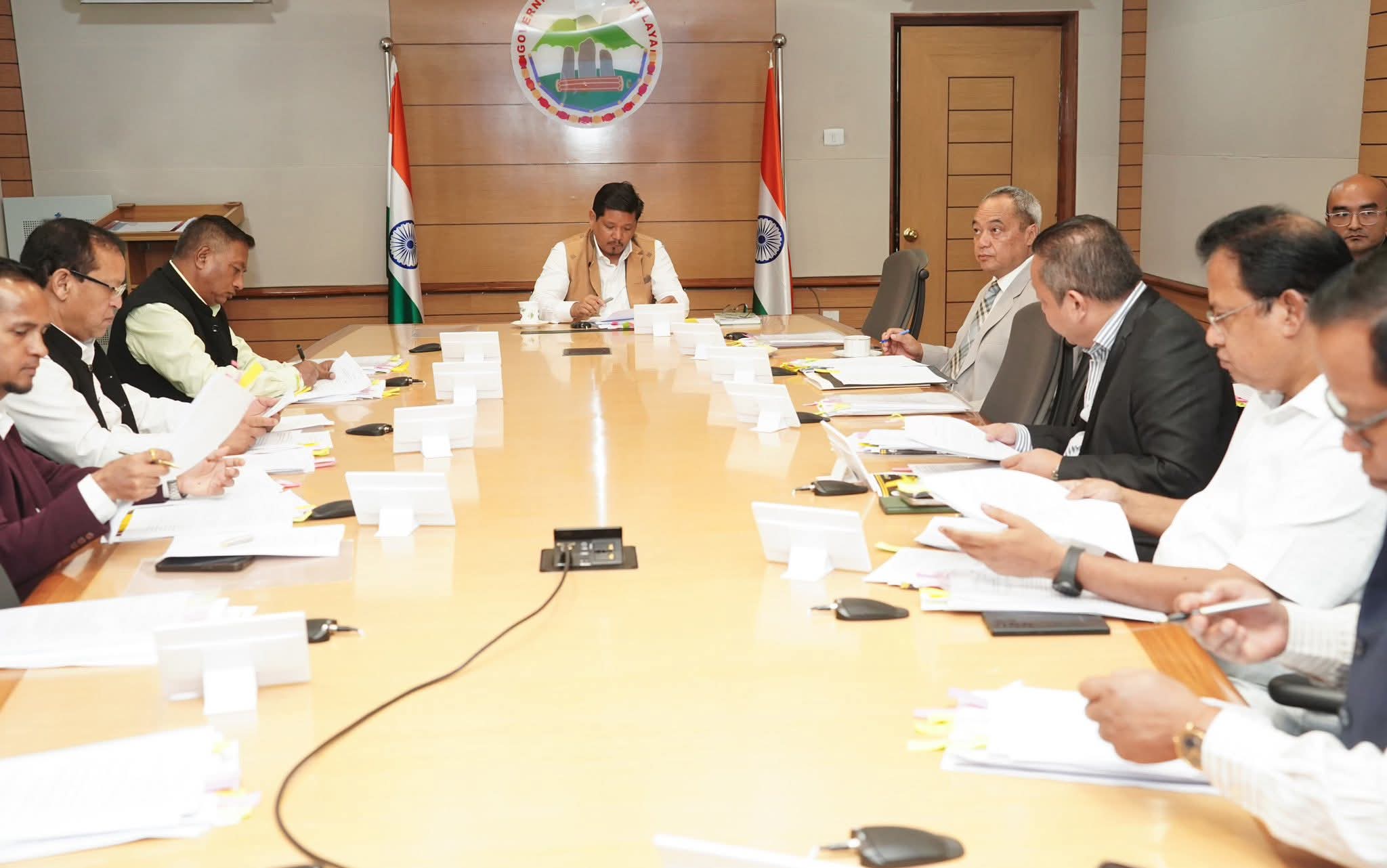
In a major step toward aligning with the nationwide criminal law reforms, the Meghalaya Cabinet on Thursday approved three critical rules framed under the new criminal codes that came into force across the country on July 1, 2024. Cyril VD Diengdoh, Commissioner and Secretary of the Home (Police) Department, informed that the rules were approved as part of the ongoing implementation of the Bharatiya Nyaya Sanhita, Bharatiya Nagarik Suraksha Sanhita, and Bharatiya Sakshya Adhiniyam.
“These rules have been provided as model rules by the Ministry of Home Affairs. After due consultation with the Honourable High Court of Meghalaya, which is required as per the procedure, and with their consent, the cabinet today has approved these three new rules,” said Diengdoh.
The first, Meghalaya e-Sakshya Management Rules 2025, mandates that all electronic evidence such as videos and photographs collected by police be securely uploaded to a mobile application called e-Sakshya. “This system will be secured with a 16-digit code and hashtag, linked to both the CCTNS (Crime and Criminal Tracking Network and Systems) and ICJS (Interoperable Criminal Justice System),” he explained. “Once uploaded, a unique ID is generated, ensuring that the evidence is tamper-proof and can be used during court proceedings.”
The second, Meghalaya Electronic Process Issuance Service and Execution Rules 2025, has been framed under Section 64 of the BNSS. “This introduces reforms to digitise the process of issuing summons and warrants. Through e-summons and the Case Information System software, summons can now be issued electronically via the CCTNS, making the process faster and more efficient,” he said.
The third, Meghalaya Guidelines for Community Services 2025, introduces a new dimension of reformative justice. “Instead of conventional punishments like imprisonment or fines, this allows courts to sentence individuals convicted of minor offences to community service. This is a forward-looking step to humanise the justice system while ensuring accountability,” said Diengdoh.
“To summarise,” he concluded, “these are three new criminal rules which have to be brought in line with the rest of the country as per the mandate from the Ministry of Home Affairs to take forward the implementation of the three new criminal laws in the state of Meghalaya.”