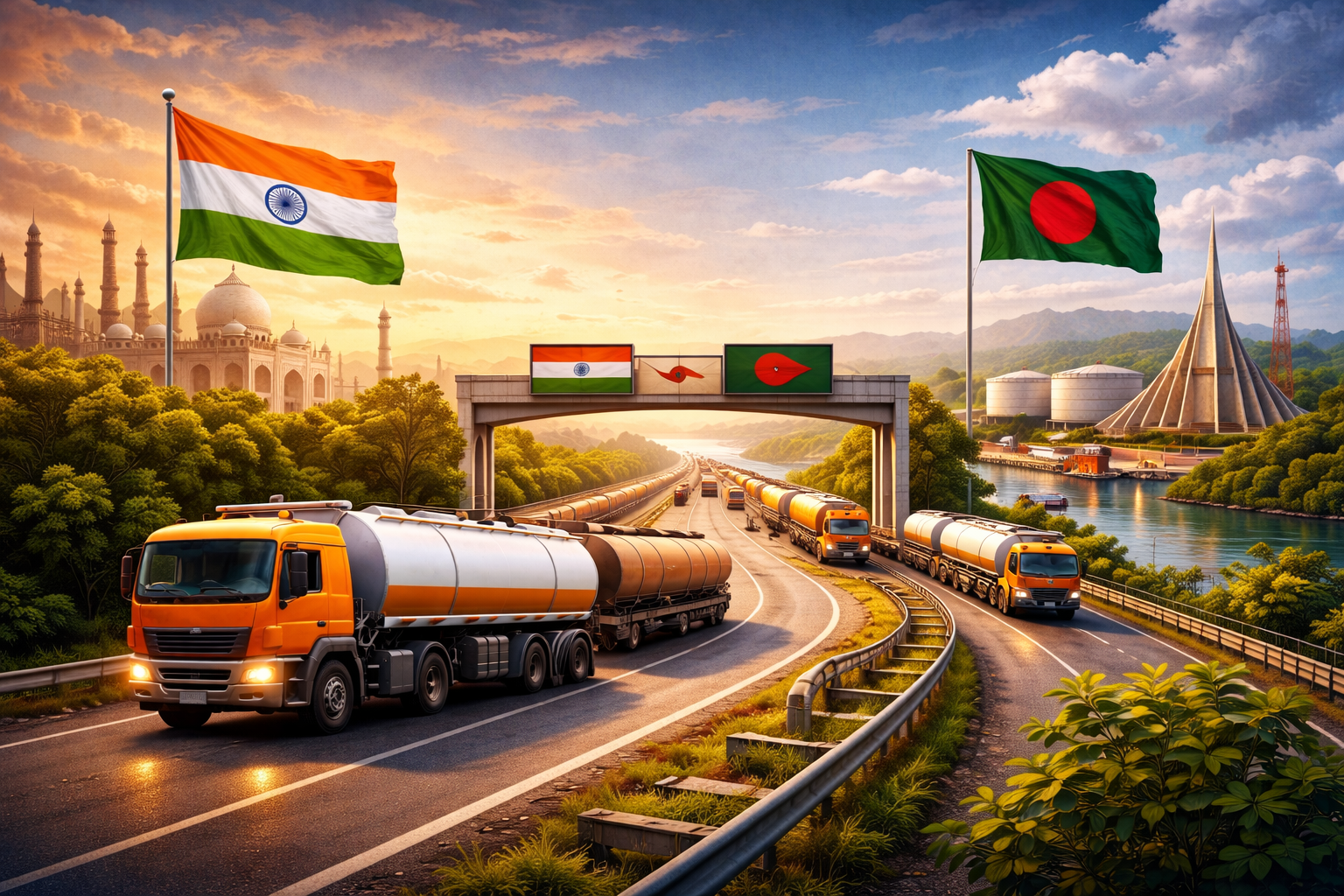
Amid the escalating conflict in West Asia and its ripple effects on global fuel supplies, Bangladesh has begun receiving an additional 5,000 tonnes of diesel from India through the cross-border pipeline, highlighting an urgent energy lifeline as the country grapples with supply pressures. The fresh consignment is being delivered to the Parbatipur Padma Oil depot and rail head depot as part of ongoing fuel imports aimed at ensuring a steady supply, officials familiar with the development said. “Another 5,000 tons of diesel has stated coming to Parbatipur Padma Oil depot from India through the India-Bangladesh Friendship Pipeline,” Parbatipur Padma Oil depot Manager Md Ahsan Habib Chowdhury said, adding that Parbatipur began receiving the latest supply from the morning of April 16, as reported by Dhaka Tribune. The development comes even as India moves ahead with its commitment to supply 5,000 tonnes of diesel through the pipeline, reinforcing its role as a key energy partner to Bangladesh during a period of global uncertainty.
According to officials from the ministry, Bangladesh had earlier received 8,000 tonnes of diesel at the Parbatipur depot from Numaligarh in India on April 14, following a supply of 22,000 tonnes in March. Sources indicated that a total of 30,000 tonnes of diesel had reached the Parbatipur depot from Numaligarh between March and April 14, reflecting a steady scale-up of fuel supplies amid rising demand.
Earlier, Bangladesh Petroleum Corporation chairman Muhammad Rezanur Rahman had said, “Under our agreement with India, the country is to deliver 180,000 tons of diesel annually through the pipeline. The 5,000 tons arriving now is part of this arrangement.” He further added, “The consignment arriving today is 5,000 tons, and we hope that within the next two months, we will bring in the total diesel amount for the entire six months,” noting that at least 90,000 tonnes are slated for import within six months under the agreement.
The fuel arrival assumes added significance as the Bangladesh government intensifies monitoring of domestic stock levels amid concerns over illegal hoarding. The energy ministry earlier flagged reports of artificial shortages being created by unscrupulous traders, stating that enforcement drives had been conducted to address the situation. Against this backdrop, the steady inflow of fuel from India not only cushions immediate supply disruptions but also reflects a pragmatic shift in bilateral engagement following recent strains. In the shadow of the Middle East conflict and rising energy insecurity, Bangladesh’s reliance on assured supplies from India highlights the interplay between geopolitical compulsions and economic necessity, reinforcing a quieter, need-driven diplomatic posture despite earlier rhetorical tensions.
While international political calculations continue to shift rapidly, it may be noted that anti-India sentiments had surged in Bangladesh as recently as December last year. National Citizen Party leader Hasnat Abdullah made hostile remarks against India, threatening to isolate the Seven Sisters — India’s Northeastern states — and offering refuge to Northeast separatists if Bangladesh is destabilised. A diplomatic row had subsequently erupted between the two countries amid rising anti-India rhetoric, prompting India to summon the Bangladesh High Commissioner in New Delhi on December 17 over concerns regarding the security of its mission in Dhaka. The tensions followed provocative statements by sections of the Bangladeshi political leadership, with ties between New Delhi and Dhaka remaining strained since the ouster of former Prime Minister Sheikh Hasina in August 2024.
India begins diesel supply to Bangladesh amid West Asia war, signalling pragmatic reset in ties