
East Khasi Hills Deputy Commissioner Abhilash Baranwal today said 81 per cent of dog-bite cases in the district were attributed to pet dogs, making responsible pet ownership a key component of the administration’s strategy for the Elimination of Dog-mediated Human Rabies. “81 percent of the dog bite cases in the district and from pet dogs,” the Deputy Commissioner said. He said pet owners would have to be more responsible to prevent inconvenience to residents, particularly people walking on streets or visiting homes where dogs are kept.
“All the pet owners now have to mandatorily register their pets with the Rongbha Shnongs,” the DC said, adding that vaccination records of registered dogs would have to be maintained. The administration will coordinate with community leaders to schedule vaccination drives for pet dogs, with owners required to retain valid vaccination certificates and community leaders supervising vaccination records. “We request the community leaders to kindly fix date and time,” he informed.
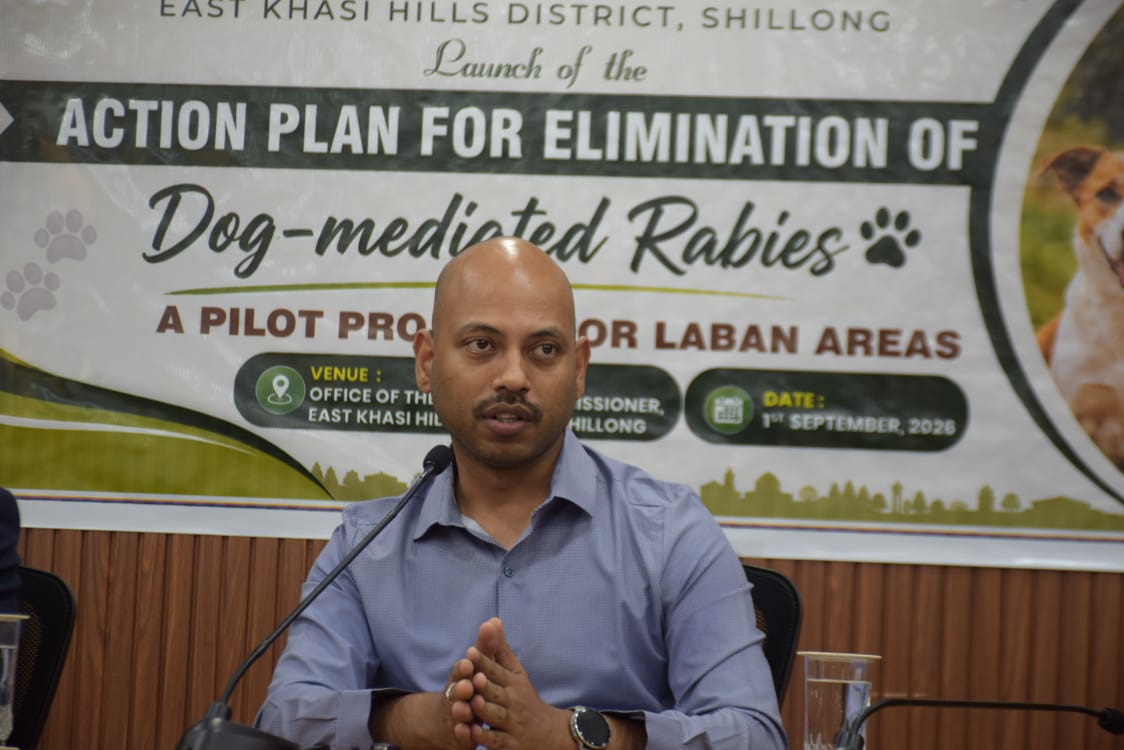
The Deputy Commissioner launched the action plan for elimination of dog-mediated rabies; pilot project launched for Laban areas at the office of the Deputy Commissioner, East Khasi Hills, Shillong, bringing together enumeration, vaccination, sterilisation and post-sterilisation care of stray dogs, alongside measures to regulate pet ownership and feeding practices. The administration has completed the enumeration of stray dogs and commenced their vaccination. “The vaccination of stay dogs have started today,” he added. The vaccination programme will be completed within a defined timeline, followed by sterilisation to prevent an increase in the stray-dog population and necessary post-sterilisation care.
The administration will also identify designated feeding zones for stray dogs to regulate feeding practices and strengthen the rabies-control strategy. “The pet owners also have to be slightly more responsible,” the DC informed. “Regulation of feeding zones for stray dogs will be very important,” the administration said. Community leaders and traditional institutions will identify designated areas where stray dogs can be fed, while feeding outside notified zones will be prohibited. The measures are aimed at preventing the spread of rabies, controlling the stray-dog population and bringing greater order to community feeding practices.


