
By Rushoti Mukherjee
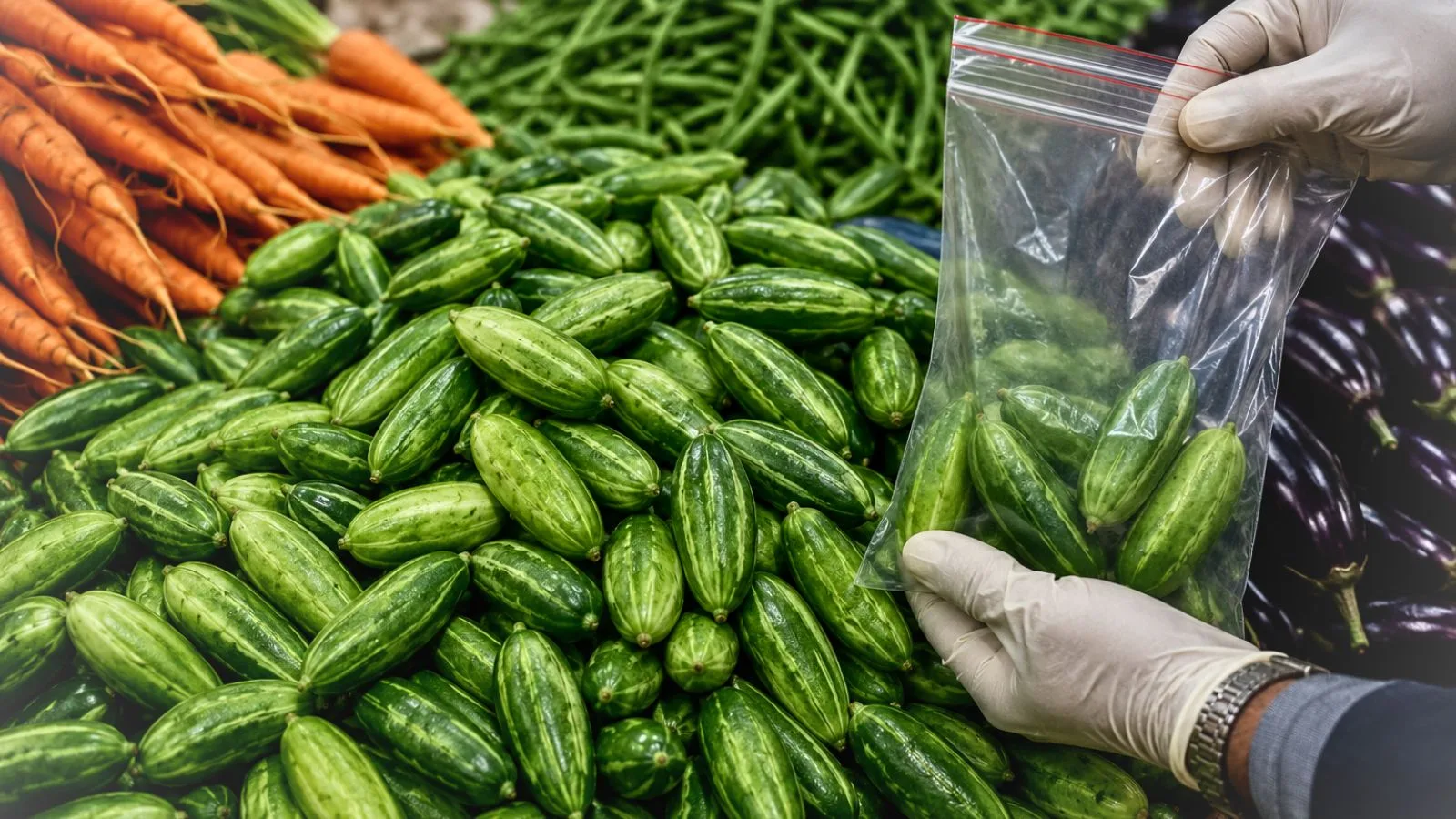
Amid growing concerns over reports that chemically dyed pointed gourd (potol) was being transported from wholesale markets in Assam into Meghalaya to make the produce appear fresher, the Meghalaya Food Safety Department has launched large-scale swab testing of vegetables and fruits across all 12 districts. More than 300 samples have been collected from markets, including Ïewduh. Officials have destroyed a suspected consignment before it reached consumers and initiated plans for food safety checkpoints at key entry points to prevent the State from becoming a dumping ground for adulterated produce.
The intensified surveillance follows reports from neighbouring Assam regarding vegetables allegedly treated with artificial colours and chemicals before being supplied to markets across the Northeast. Given Meghalaya’s dependence on fruits and vegetables sourced from outside the State, the Commissionerate of Food Safety has stepped up inspections, sample collection, rapid testing and mobile laboratory operations to strengthen oversight of the food supply chain and safeguard public health.
Deputy Commissioner of Food Safety (Enforcement) D.B.S. Mukhim said the department acted immediately after information regarding suspected adulterated vegetables surfaced on social media.
“Once we saw the news through social media, immediately, very prompt action has been taken and till date my officers have collected more than 300 samples of different kinds of vegetables and fruits as well,” Mukhim said.
Officials said surveillance teams were deployed across Meghalaya to conduct inspections and collect samples from wholesale and retail markets. Swab tests were carried out on vegetables and fruits to detect the possible presence of artificial colouring and other forms of adulteration before the produce reached consumers.
During inspections in Shillong, officials identified a small consignment of pointed gourd that raised suspicion during preliminary swab testing for artificial colouring. The stock was immediately destroyed before it entered the retail market.
“As per the swab test conducted for testing of all these vegetable samples which have been tested so far, only one we suspected of the presence of artificial color and then immediately my officer had gone there to take stock of the situation. But then like the quantity was too less, and it was destroyed then and there. Yes, it’s Potol,” she informed.
While the overwhelming majority of samples tested across the State have not shown signs of adulteration, officials said continuous monitoring remains essential because of Meghalaya’s dependence on imported produce. The Commissionerate is also examining the feasibility of establishing surveillance checkpoints at major entry points, including Byrnihat, to strengthen scrutiny of food products entering the State.
“Check point as of now, we are contemplating on conducting very very soon, but as now we are not able to do that because of so many reasons in the department have so many works to do, but then a plan has been made for that and we will definitely do that. We have food safety on wheels which is a mobile food testing laboratory which goes from one area to another area, so the food safety on wheels have also done their part not necessary that we will all go and check through the points but they are doing their parts in every district,” Mukhim said.
Officials said Food Safety on Wheels mobile laboratories are conducting rapid testing and spot inspections across districts while plans for permanent checkpoints are being finalised.
The department has also identified poor documentation within sections of the vegetable supply chain as a major challenge in tracing the origin of suspect produce. Traders and wholesalers have been directed to maintain invoices and purchase records to improve traceability and facilitate enforcement action whenever required.
Emphasising the role of consumers in strengthening food safety, officials urged residents to remain vigilant and inspect vegetables carefully before consumption. Mukhim also outlined a simple household method that may help identify artificial colouring.
“Put that inside a glass of water. And that water will definitely turn green or whatever kind of colour that they’re using, and it will dissolve in the water,” she added.
Officials encouraged consumers who suspect adulteration to submit samples to the nearest district food safety office for examination, stressing that sustained enforcement, trader accountability and public awareness will be critical to protecting Meghalaya’s markets from adulterated and potentially harmful food products entering from outside the State.


