The Meghalaya Government has formally invited the Khasi Students’ Union (KSU) for talks on its five-point charter of demands, days after the August 19 violence in Shillong, with Chief Minister Conrad K. Sangma maintaining that there was no intelligence failure but acknowledging that the government was surprised by the scale of the mobilisation and the actions that followed. The government’s invitation marks an attempt to reopen dialogue with the student organisation while maintaining that investigations into the violence will proceed independently and that no organisation or individual can influence the course of law.
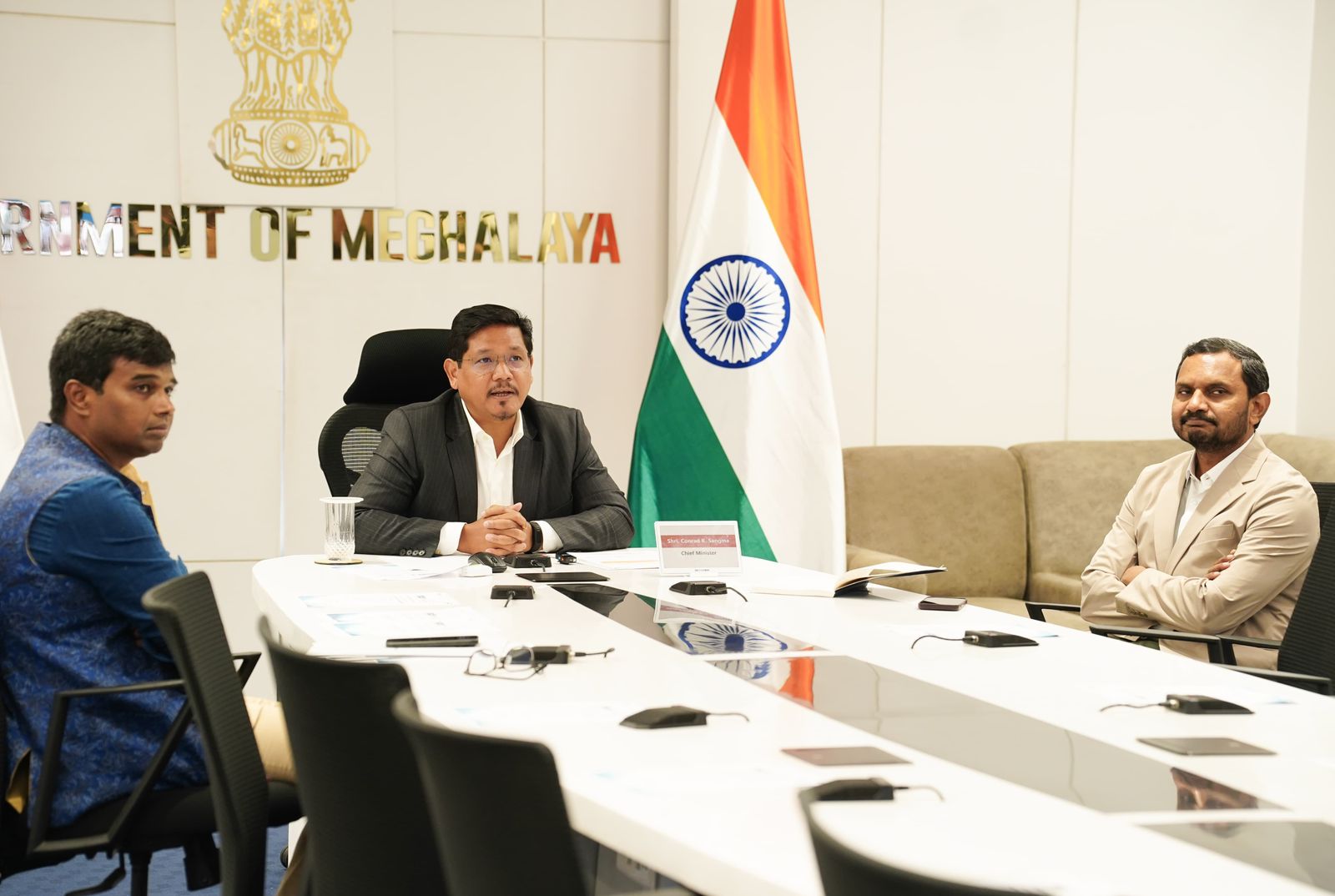
Speaking to reporters, Sangma said the government had officially written to the KSU inviting its representatives for discussions and expected a response shortly. He said all five issues raised by the organisation would be taken up during the proposed talks.
“We have written to KSU today officially this, ask asked them to come for discussion and the talks. We expect we will get some response may be by this evening or tomorrow and we will discuss all the five agendas.”
The Chief Minister, however, drew a distinction between political dialogue and the ongoing legal proceedings arising from the August 19 violence. He said the government could discuss the KSU’s demands but would not interfere with investigations or alter legal procedures in response to pressure from any organisation or individual.
“Whatever happens the law will take its own course and therefore it will be incorrect for me and anybody to come and say that the rules and laws will change because one organisation, or different organisation or one individual , that is not proper in governance. We are going to ensure that investigation is done on all fronts.”
Sangma’s remarks came amid questions over whether the administration had adequate intelligence and preparedness ahead of the KSU rally. Rejecting allegations of an intelligence failure, he said the government had received information that the mobilisation was expected to remain peaceful. He nevertheless admitted that the scale of the rally and the subsequent actions created an operational challenge for the administration, particularly because the incidents unfolded across a large geographical area.
“When movement of this scale taking place, it is not physically to place people everywhere but we had our people along the routes and the scale and overall geographic area in which the incident was happening led to a lot of complexity for us to moniter the situation on the ground, all of these challenges were there. There was clear understanding that the rally will be peaceful. There was no intelligence failure but we were caught by surprise, in some sense by the scale and the action.”
The August 19 violence had triggered widespread concern in Shillong, with vehicles vandalised and several incidents of assault and arson reported during and after the KSU-led mobilisation. The government has since maintained that those responsible for violations of law would face action and that investigations would cover all aspects of the incidents.
Sangma also responded to criticism over his absence from the State when the violence occurred, saying he was already travelling and that his schedule had been fixed. He stressed that the administration’s response was not dependent on the presence of the Chief Minister, pointing to the role of the Deputy Chief Minister in charge of Home (Police), the Chief Secretary, the Director General of Police and other senior officials.
“It happened on the day, I was already on the flight and I was travelling, schedule was already fixed. It is not just one person, there is entire team that looks into all aspects of governance, Deputy Chief Minister Incharge of Home (Police ) was personally monitoring situation and entire team of Chief Secretary, DGP and police officials all were here. More importantly in today’s technology world we were in touch moment, every hour, discussing every aspect and ensuring that whatever quick decision has to be made is made and there was no gap in terms action that had to be taken.”
The Chief Minister further said that the government had remained in communication with stakeholders in the run-up to the mobilisation, although formal meetings with the KSU could not be held before the rally. He said the absence of a meeting should not be interpreted as a failure of communication, claiming that discussions and exchanges had continued through multiple channels.
“Everybody has right to put their views but, there is much more going on behind the scenes, multiple communications are continuously are happening and lot of discussion took place, yet inspite of the communication , meetings before the rally couldn’t take place but doesn’t mean we were not communicating.”
The government’s decision to formally invite the KSU for talks comes as the administration seeks to address the organisation’s five-point charter while simultaneously allowing the legal process arising from the August 19 violence to continue. Sangma’s remarks underline the government’s position that political engagement and law enforcement must operate on separate tracks, with dialogue available on the demands but no compromise on investigations or accountability.
The proposed talks could provide an avenue for the government and the KSU to address the issues that led to the mobilisation, even as tensions remain high following the violence. The response from the KSU to the government’s invitation is now expected to determine whether formal dialogue can resume between the two sides.