Shillong, June 4: As Union Home Minister Amit Shah, Governors, Chief Ministers and senior officials from across the North-East gathered in Shillong for the 73rd Plenary Session of the North Eastern Council (NEC), the Meghalaya capital found itself paralysed by hours of traffic congestion, reigniting questions over the practical meaning of Digital India and the government’s repeated calls for austerity in public administration.
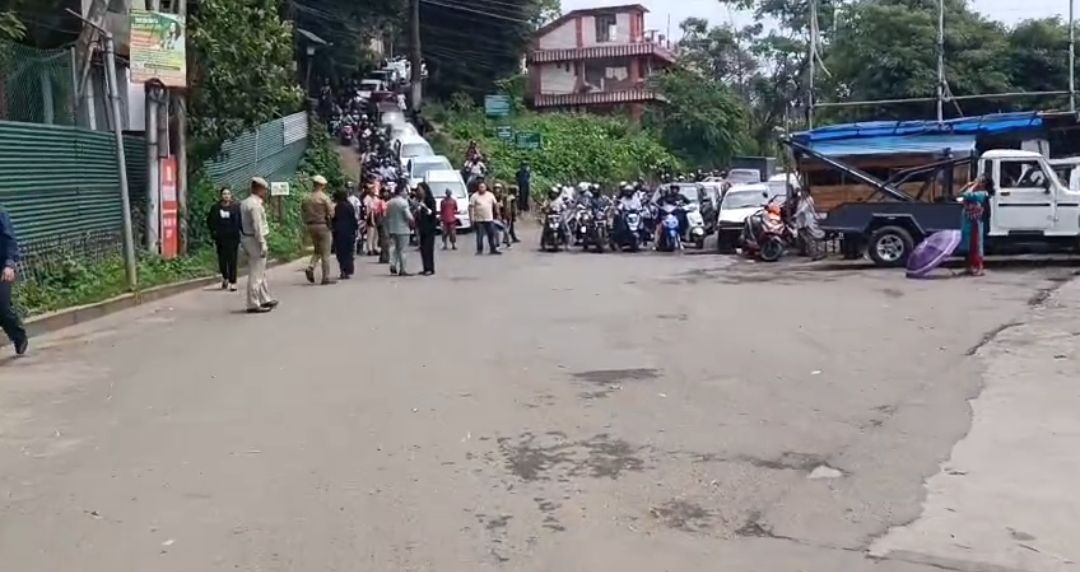
For thousands of residents, Thursday’s most visible outcome of the high-profile gathering was not the policy discussions taking place inside conference halls, but the unprecedented disruption on the city’s roads. Traffic movement was repeatedly halted to facilitate the passage of VVIP convoys, leaving office-goers, students, patients and daily commuters stranded for long periods across key stretches of the city.
The scenes unfolded against the backdrop of a government that has consistently promoted digital governance, virtual connectivity and efficient administration. The disruption prompted many residents to ask whether large-scale physical gatherings involving extensive convoy movements remain necessary when technology now enables high-level consultations through secure digital platforms.
“What is the purpose of Digital India if entire cities have to be brought to a halt for meetings?” asked one commuter who spent nearly an hour trapped in traffic. “The inconvenience is always borne by ordinary citizens,” another added.
Another resident questioned the government’s repeated emphasis on austerity measures, “People are constantly told to conserve resources and accept cuts in expenditure. But when such large official gatherings take place with massive security deployments and convoy movements, the message appears different.”
What began as a routine working day soon descended into gridlock. Vehicles crawled through Shillong’s already congested roads as diversions and temporary stoppages were imposed along multiple routes. Even two-wheelers found it difficult to navigate through the bumper-to-bumper traffic.
“I left home much earlier than usual, but still could not reach my office on time. The traffic simply wasn’t moving,” said a commuter caught in the congestion.
Another resident waiting near a diversion point remarked, “It felt like the entire city had come to a standstill. We were stuck for nearly an hour without knowing when the road would reopen.”
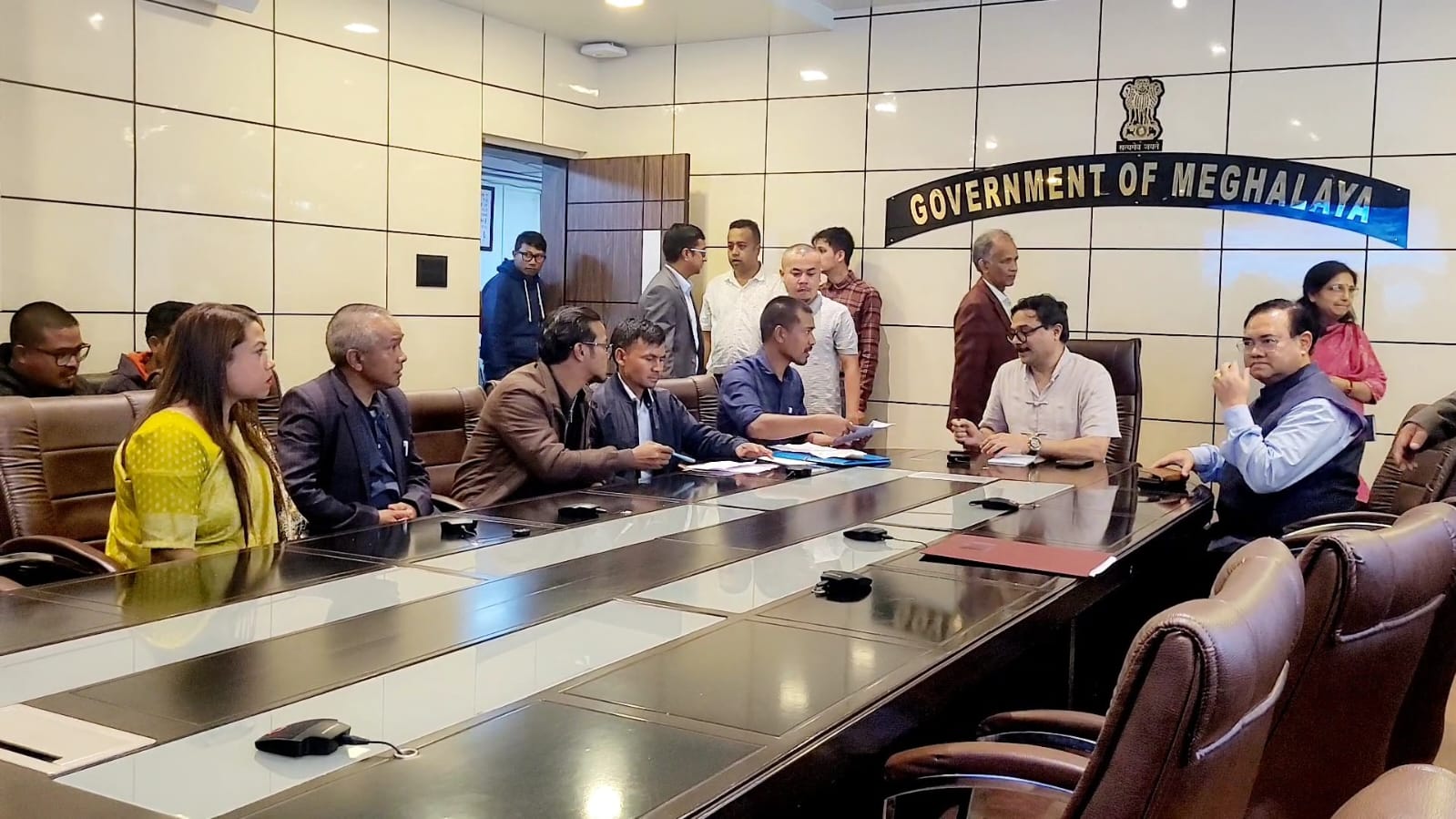
The NEC plenary session transformed Shillong into the administrative hub of the North-East for the day, drawing political leaders, Union Ministers, Governors, bureaucrats and delegates from all eight northeastern states. Security arrangements were intensified across the city, with Pinewood Hotel and the State Convention Centre emerging as the principal venues of activity.
A continuous stream of official vehicles, escort teams and security personnel moved through Shillong’s narrow roads, exposing once again the limitations of the city’s ageing and overstretched transport infrastructure. The situation also revived a longstanding debate over whether public convenience receives adequate consideration during high-profile government events.
“We understand the importance of security, but ordinary people should not have to bear the entire burden,” said a shopkeeper whose business was affected by the restrictions.
A college student added, “By the time I reached campus, most of my classes were already over. It was frustrating because there was nothing anyone could do.”
While the NEC meeting focused on development, regional cooperation and policy coordination for the North-East, many Shillong residents were left reflecting on a different question: whether governance in the digital era can evolve in a manner that minimises disruption to citizens. As governments increasingly advocate technology-driven administration and fiscal prudence, Thursday’s experience highlighted the gap that often remains between policy ideals and the realities faced by the public.
For many residents, the defining image of the day was not the gathering of power inside conference halls, but the long queues of vehicles stretching across Shillong’s roads—a reminder that when governance arrives on wheels, it is often ordinary citizens who pay the price in time, productivity and convenience.