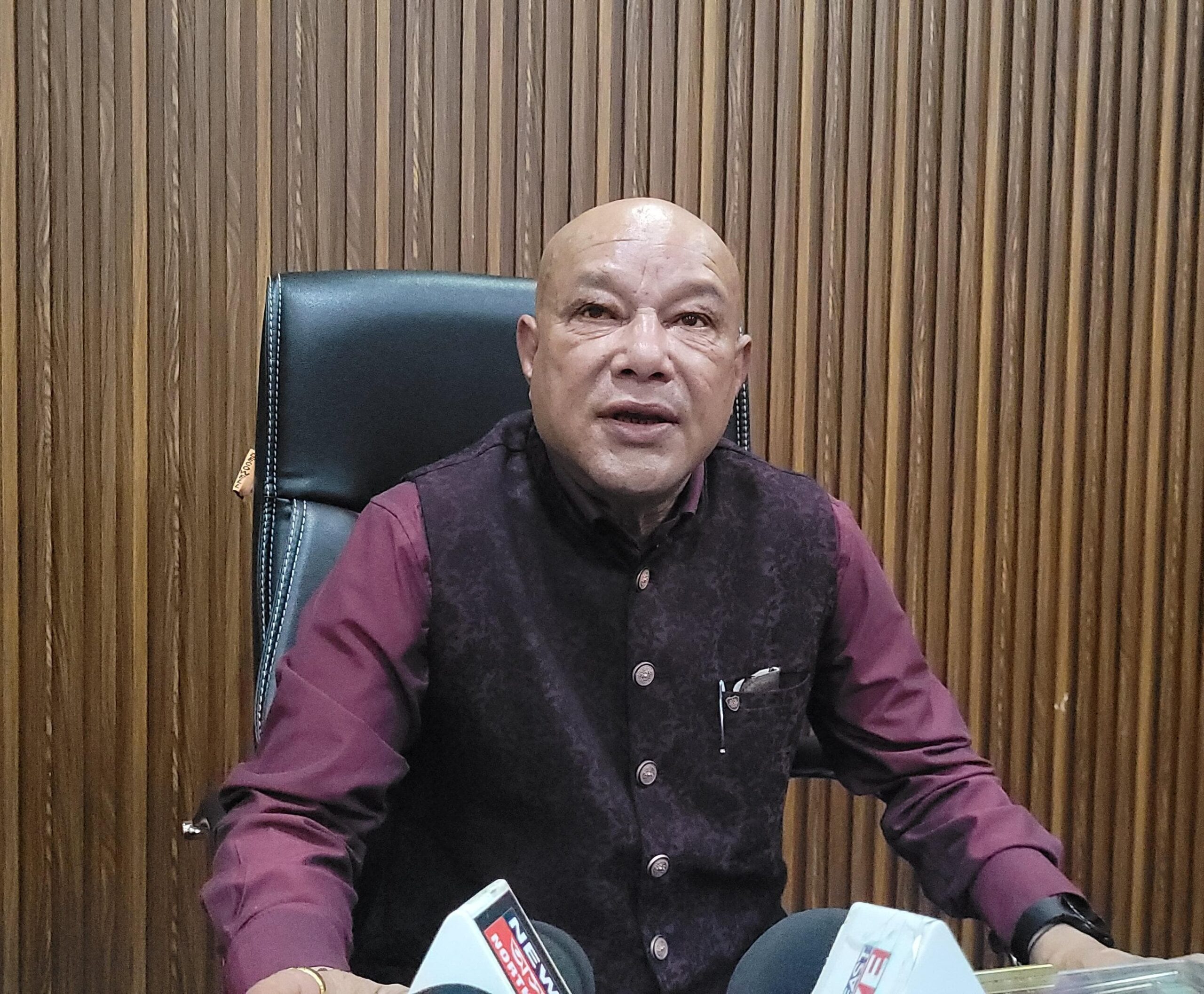

Former Chief Minister and seven-time legislator Dr Mukul Sangma has questioned the political morality of the ruling NPP and BJP, accusing them of engaging in a sustained poaching exercise that has reshaped Meghalaya’s political landscape, with nine MLAs joining the NPP and eight merging with the BJP. Following the 2023 Assembly elections, the People’s Democratic Front (PDF) was the first casualty of the poaching exercise, losing both its elected MLAs, while the United Democratic Party (UDP) has been virtually wiped out, with only one MLA left in the party. The developments have brought the politics of defections within Meghalaya’s ruling coalition into sharp focus, particularly as the NPP and BJP have benefited from the weakening of parties that were their own alliance partners. Sangma, who is also the Leader of Opposition in the Meghalaya Legislative Assembly, said the continuing defections reflected a pattern that had been unfolding for years, but targeting parties within the same ruling alliance was particularly disturbing.
Tracing the history of defections, Sangma said the first victim after the 2018 Assembly elections was senior legislator M.M. Danggo. He recalled that Meghalaya had traditionally returned fractured mandates, allowing regional parties to maintain their presence in the Assembly. The exception was 2013, when the Congress secured 29 seats and won another seat in a subsequent by-election, taking its strength to 30 and enabling it to form a government without regional party support for the first time. “There was only in 2013 when we got almost halfway mark and we got 29 MLAs elected in 2013 Assembly elections and later one more elected in the by election making the total strength of congress to 30 seats and we formed Government withoutout the support of the regional parties for the first time in 2013,” he said.
The former CM said, after the 2023 Assembly elections, the PDF became the first casualty of political poaching, with both its elected MLAs switching sides. The Congress subsequently faced a similar exercise, but Sangma said the circumstances were different because the PDF was part of the ruling coalition, while the Congress was in the Opposition. “So it is expected that the party in the government will try to weaken any party who is in the opposition. So that is usually a political strategy which many political parties do engage with,” he said.
Sangma said the BJP’s subsequent targeting of the UDP was fundamentally different because the party was part of the same ruling arrangement. Eight UDP legislators merged with the BJP, while three joined the NPP, even as both parties continued to remain in the same alliance. Describing the move, he said, “After that you saw BJP engaging with poaching exercise again targetting the alliance partner which is unusual, abnormal unethical.” He further asserted, “This is abnormal unethical and does not augar well for our democracy.” Rejecting any justification for the defections, he added, “No excuse can justify it.”
He also dismissed any comparison between the UDP defections and his own departure from the Congress to join the Trinamool Congress, maintaining that the circumstances were different.
“If somebody says Dr Mukul You have also splited and merged with TMC, I wanted to leave Congress and I was not victim of poaching,” Sangma said. He maintained that his departure from the Congress was voluntary and pointed out that the 12 legislators who moved with him were in the Opposition at the time, as he further hinted that his move to the Trinamool Congress could not be equated with the poaching of UDP legislators, as the TMC was not in an alliance with the Congress in Meghalaya when he left the grand old party.