

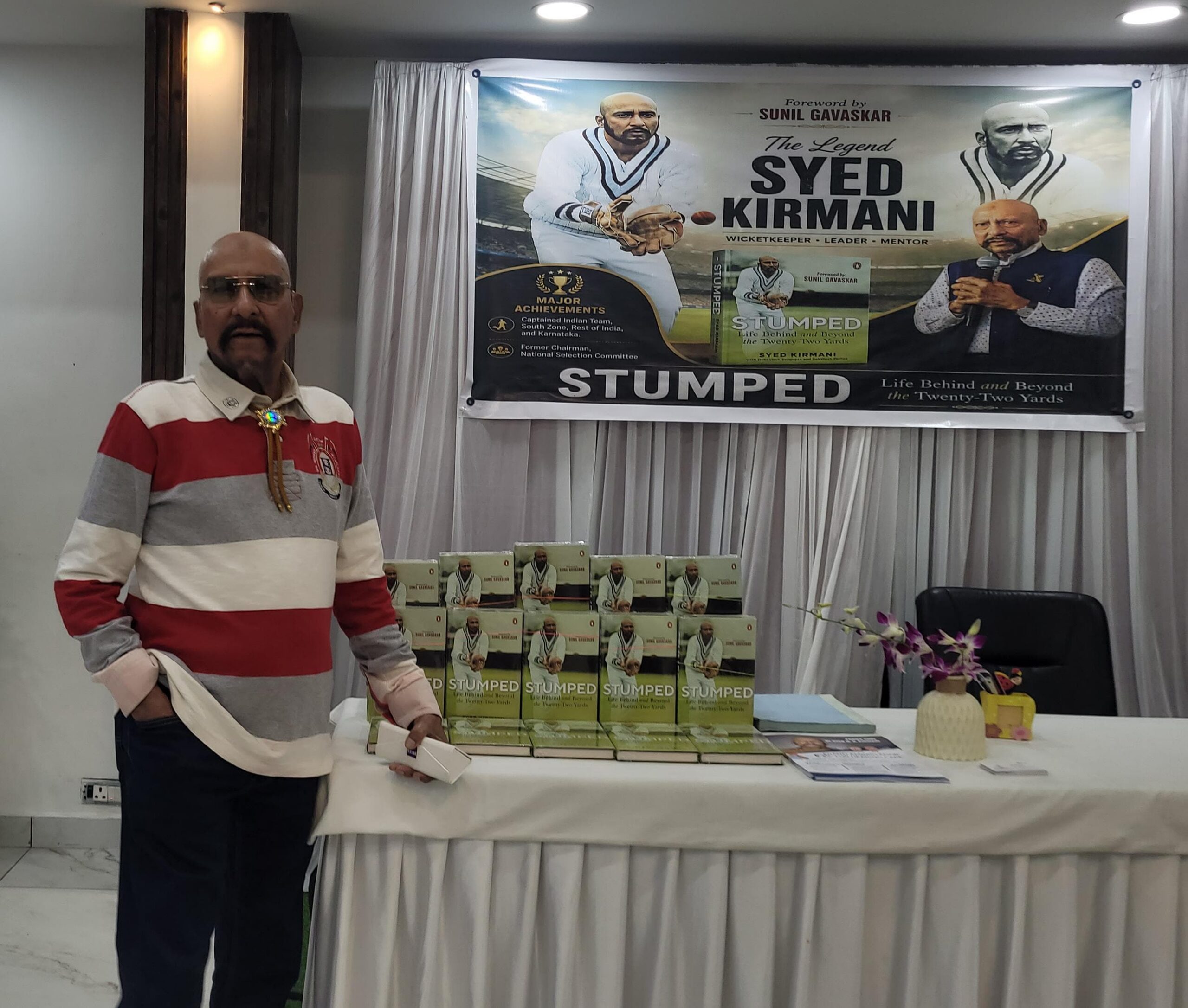
Shillong: Meghalaya’s cricketing ambitions need to move beyond identifying talented players and focus equally on building a strong coaching and scouting ecosystem, according to former India wicketkeeper and 1983 World Cup-winning team member Syed Kirmani, who has offered his experience and expertise to help strengthen the State’s sporting infrastructure.
Kirmani said Meghalaya and other smaller States in the Northeast required systematic scouting, consistent grassroots tournaments and professionally trained coaches to ensure that promising players were identified and developed. He stressed that selection could not be based on performances observed over a single day and called for a structured pathway beginning in schools and extending through local and league tournaments to specialised academies.
The former cricketer said an internationally reputed sportsperson could play a mentoring role for emerging teams in the Northeast and offered to contribute his expertise if given an opportunity. “You got to have an internationally reputed Sports person to come here and be a mentor to the upcoming promising, Tripura, Assam, Meghalaya team.”
“I have offered my services If I am invited to Mentor and to develop further spots in all sporting activities because I have represented my state in hockey, football, of course Cricket and Athletics, and I’ve been a director of Karnataka Cricket Academy for seven years, and I am the Consulting director to National Cricket Academy as well.”
Kirmani said his experience across multiple sports and his association with cricket administration could be utilised to help weaker sporting regions progress. “So any given opportunity to any weaker side, any weaker State in any sport, It’ll be my pleasure to give my best to take Meghalaya to the next level.”
On whether he would be willing to associate himself with Meghalaya during the National Games, Kirmani said he would consider the opportunity subject to his commitments and the need for advance planning.
“It will be my pleasure to looking into my various commitments, I will have to be informed much earlier, because am the national head for Scouts and guides Fellowship.”
On the selection process, which often determines whether young players from smaller States get an opportunity to progress, Kirmani called for a complete assessment of a player’s talent, performance and consistency rather than relying on a single selection trial.
“The selection process should be looked into total talent of an individual, his performance with consistency, One day of selection will not prove that you have selected the best player you have to have the local tournaments, the league tournaments, the school Cricket tournament, right at the grassroot level it should start.”
He said school cricket should become the foundation of the talent-identification system, with the best performers being gradually moved into academies for advanced training.
“School tournaments should be conducted between the schools, it should be conducted and you pick the best students out of that whoever performs the best. And from there, you take them into the academy for further coaching, finer points of the game.”
Kirmani underlined that strengthening the coaching system was as important as identifying players, delivering his strongest message on the need to develop coaches themselves.
“You have to coach the coaches first, which I did as a director, and that is the way to go about.”
He said coaches should be carefully selected and capable of communicating effectively with young players. “Select the right coaches who speak the same language to all the kids, So It should be and theres got to be some International Cricket.”
Kirmani also argued that the Northeast’s smaller States required a more extensive scouting mechanism to ensure that talent was not overlooked during national-level selection.
“Now, we have to scout around into each and every state of smaller size, you have to scout around to each and every state to find out who is playing better, which are the consistent player, talent guys are there and bring them to the proper academy centre.”
He said Assam, Meghalaya and Tripura would have separate teams competing in the Ranji Trophy, but players should first establish themselves through sustained performances at the grassroots level.
“Assam will be different, Meghalaya, Tripura will be different teams who participated in the Ranjit Trophy, but before the selection has to be based on best performance or a performer who shows consistency, You can identify a player in one or two days of selection, you have to see the players how they perform at the local tournaments, that is important, seeing his consistency for geniune selection.”
Offering to support the local selection process, Kirmani said, “I could support whoever are in the selection committee out here. I could be here to support the selection committee to identify the right guy I must look into their performances.”
He added, “You know what our best I could do, I will do my best To see that Assam, Meghalaya or Tripura team, they performed the best of their abilities and bring name to their respective States.”
Beyond cricket, Kirmani also spoke about the growing concern over young people being drawn towards drugs, stressing that prevention and awareness must begin early, particularly at the school level.
“That has to be controlled right from the tender age, Right from school days.”
He placed the responsibility on parents as well as institutions and the media, urging families to remain closely involved in the lives of their children.
“The awareness should be brought in by the parents, especially the parents have to be on a very important vigil Onto their children and not leave them on their own.”
“They should follow their children very close to see what sort of habits they are getting into.”
“That’s very important,” says
Kirmani, who also emphasised the role of public awareness campaigns.
His message for Meghalaya’s sporting future therefore extends beyond producing talented players. The former India wicketkeeper’s emphasis is on building the entire development chain — from school tournaments and grassroots scouting to academies, consistent selection and, most importantly, trained coaches capable of nurturing the next generation.


