

EXCLUSIVE
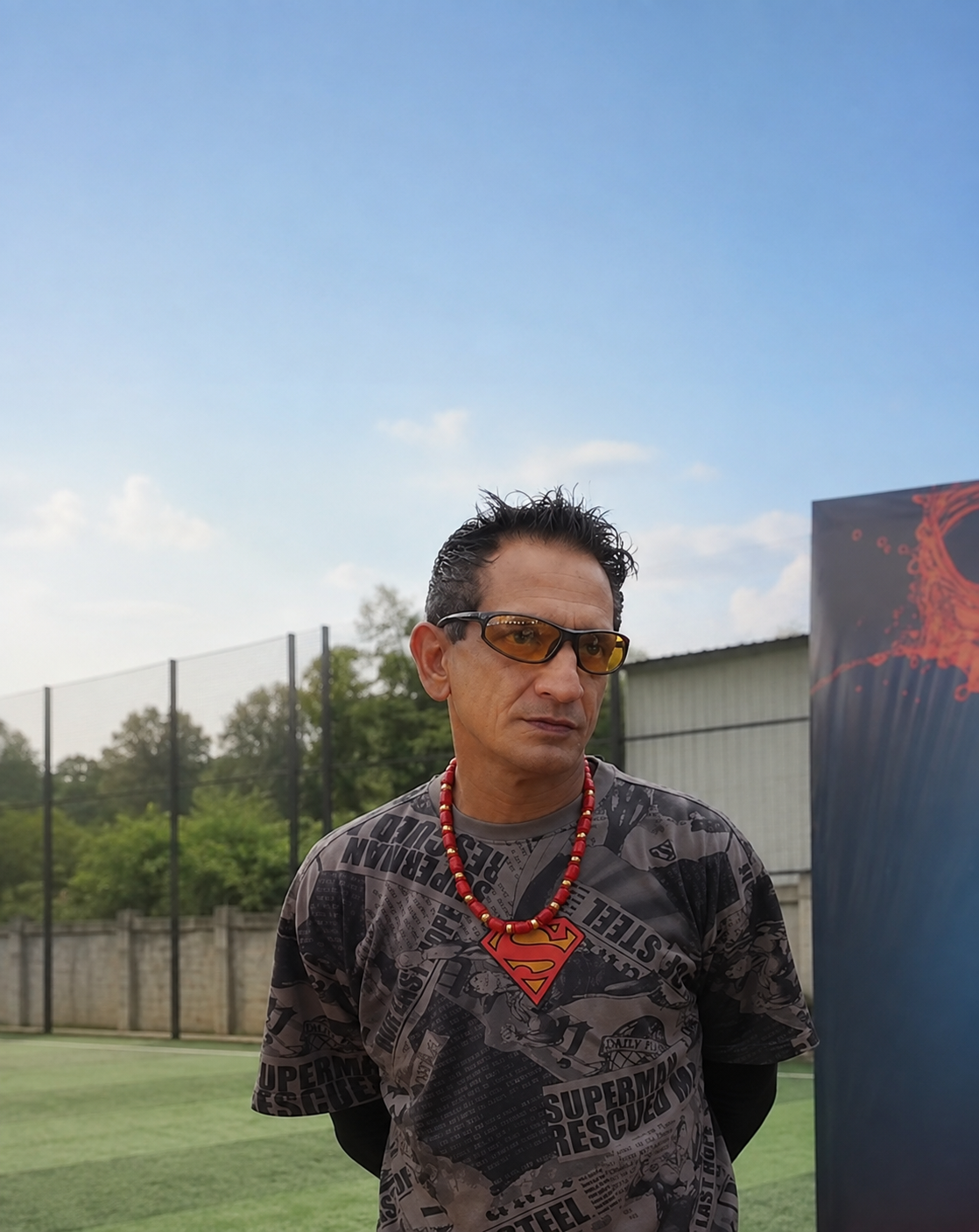
Shillong: At a time when the Northeast’s young people face the competing pulls of drugs, militancy and other destructive influences, football administrator and Minerva Academy Football Club founder Ranjit Bajaj argued that sport could offer something more powerful: purpose, discipline, belonging and a legitimate outlet for youthful energy. Drawing on his own transformation from an aggressive youth known as ‘Gangster Bajaj’ to what he described as ‘Reformed Ranjit’, Bajaj said the region’s sporting potential could be harnessed to give young people a constructive path while simultaneously strengthening India’s search for footballing talent.
Speaking about the character of young people in the Northeast and Punjab, Bajaj said both regions shared a strong warrior spirit that could be channelled either towards constructive or destructive pursuits. “People of northeast are almost identical to the people of Punjab, because both are warriors. They both think they are gangsters, both like rock music. Young people specially the warrior kinds, the warrior clans, they need high, that means they will either going to the arm forces, or they become militants or they play sports, because it gives same high,” Ranjit Bajaj said. He argued that sport could provide a healthy alternative to drugs and militancy. “So when you get doppermean when you are out having drugs or, when you are planning football, it’s the same drug released in your body except when you are playing football , it’s the natural doppermean of your body,” he said. “When you talk about runners high, that means why people runs everyday, if they miss one session they think today I didn’t run. Or may be if you miss Gym session, you say I missed the gym today. That means the body is craving for the doppermean , so sports is the perfect way if you want to stop youths getting into militancy or even drugs, and also make them good people.”
Bajaj said football could also serve as an instrument of character-building and opportunity, particularly for young people in the Northeast. “Sports specially football teaches you much more what class room does.” He said the region possessed world-class potential and cited his own academy’s experience. “The performance of youths from Northeast is world class, they can be world champion and I have proven it,” Bajaj said. “80-90 percent of my team are from Northeast and I live around 3000 km away and I come here to scout the talent, because I believe this is the best place, so talent is there but it has to be nurtured.” Recalling five young players he had taken out of the region, he said, “I was able to take five boys out of these two won scholarship and they became the world champion, in fact it was Meghalaya boy who score goal in the final against brazil and we won it.” He added, “if those boys can do it they are not special, everybody in Meghalaya can do it they just need to have right training at the right age.” He also said, “I believe if you can send someone at the age of 7-8 anyone can be a footballer as long as they are able to work hard , I don’t believe in talent.”
Bajaj’s sharpest criticism was directed at India’s football scouting system, which he said remained excessively concentrated in a limited number of districts. “I think that is one of the biggest problems in India, because if my Minerva Academy Football Club is able to defeat Indian National football team it’s not because I am a genius, this is because the scouting is wrong.” He said, “It is no where possible, no matter how good a team I have that my team can go and beat the Indian National team. Every time we play them this happens. So that means they don’t go to every concern of India.” Highlighting the geographical concentration of national players, he said, “if you see the actual map 85 percent of our players come from 23 districts out of 790 , 85 percent of our National team that means we are actually playing to only four percent population.” He called for deeper grassroots scouting, saying, “You need to go to the deep corners and find the talents from grass root.”
Bajaj’s message ultimately placed football at the intersection of youth development, social transformation and India’s sporting ambitions. His journey from ‘Gangster Bajaj’ to ‘Reformed Ranjit’ shaped his belief that youthful energy could be redirected towards discipline, aspiration and achievement. For the Northeast, he argued, the challenge was not a shortage of talent but the absence of systematic scouting, early identification, professional coaching and sustained nurturing. By taking football to the grassroots, he said, India could not only create a stronger pipeline of players for the national team but also provide young people with a constructive alternative to drugs and militancy. The next generation of footballers, he suggested, could already be in the country’s deepest corners; what was needed was a scouting system willing to go there and find them.