
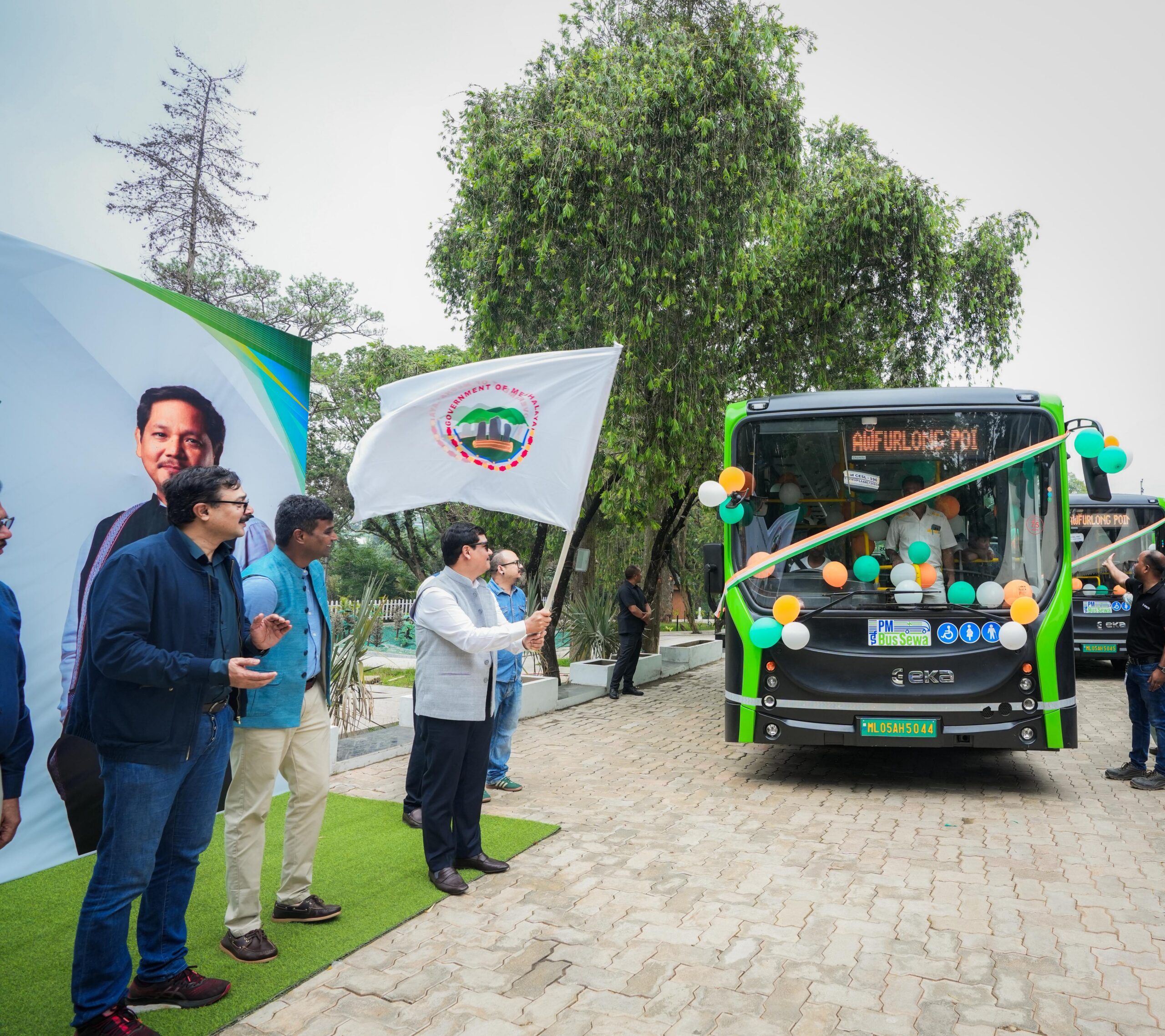
The Meghalaya Government has launched an ambitious plan to deploy 50 electric buses across Shillong and its peripheral areas, positioning electric mobility at the centre of its urban transport strategy amid a surge in global fuel prices driven by the ongoing West Asia conflict and disruptions around the Strait of Hormuz. Designed to strengthen internal connectivity and provide reliable public transportation across the capital, the initiative seeks to reduce dependence on fossil fuels while creating a modern, environmentally sustainable and commuter-friendly transport network. Once the entire fleet is operational, buses are expected to be available across Shillong and its surrounding areas at intervals of 15 to 30 minutes, significantly improving connectivity and commuting convenience for residents. Infact the initiative brings a fleet of 55 electric buses including 25 (9m, 27-seater) and 30 (7m, 22-seater) buses with a range of 150+ km and wheelchair accessibility, ensuring inclusive mobility for all. A dedicated e-bus depot at Umsawli in New Shillong is also being developed under the scheme, strengthening green urban transport infrastructure for the future. Together, the rollout signals a structural shift towards cleaner, smarter and more efficient mobility in the hill capital.
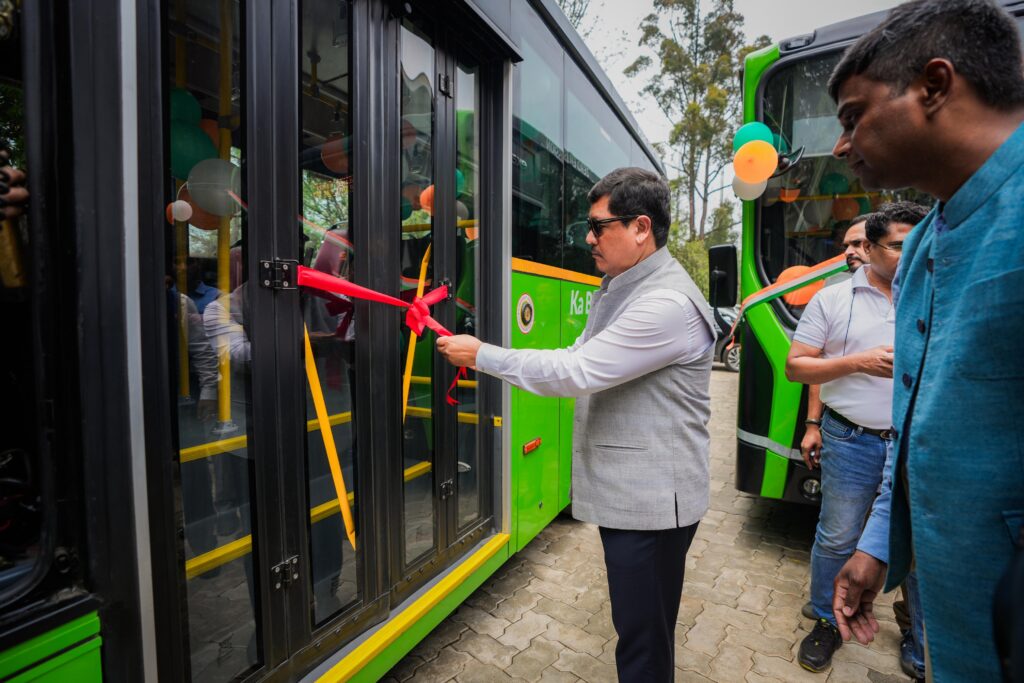
The initiative formally commenced on Tuesday with Chief Minister Conrad K. Sangma flagged off three electric buses at the State Guest House in Tara Ghar. In the first phase five buses are launched. The remaining 47 buses are expected to be inducted shortly under the PM-eBus Sewa Scheme, creating a city-wide network that will connect Shillong’s neighbourhoods and peripheral areas through regular and predictable services.
Organised by the Department of Urban Affairs, the launch marks the beginning of a new chapter in Meghalaya’s public transport system. The electric buses are expected to improve accessibility, reduce vehicular emissions and provide an efficient and environmentally friendly commuting experience for residents.
Addressing the gathering, Sangma said the introduction of electric buses reflected the Government’s commitment towards sustainable development and environmental conservation. He said the initiative would help reduce pollution levels, improve urban mobility and provide a comfortable commuting experience for citizens.
Speaking to media persons in Shillong, the Chief Minister said, “We have launched three electric buses and we will be launching another 47 buses very soon. This will be a very strong network of public transportation through out the city and also to the peripheries.”
Highlighting the operational model of the new transport system, he said the Government was moving away from a profit-driven approach and focusing instead on dependable service delivery.
“Secondly, transportation has changed with this new buses being implemented where it’s not about the profit making it by selling tickets for the buses or the operator but the government is paying them, and ensuring that these services are on a timely basis, regular and reliable service, so that every 15 minutes or 30 minutes, whether there is a passenger or not, the bus will move and passengers will know exactly when the next bus will come. So that is the kind of model that we are implementing,” he said.
The Chief Minister said the Government was also encouraging a wider transition towards electric mobility by offering incentives and waiving registration-related charges for electric vehicles.
“Thirdly, We are also encouraging our citizens to start transiting into e-vehicles and that is something that we’ve been trying to push as your aware that the registration and the taxes on vehicles which are electric is zero, and that there will be no registration, Nothing. There is of course one notification which was there for last three years, which automatically expired and We are renewing it next week in the cabinet, but the message is larger message is that registration fees is not there for Electrical vehicles,” he said.
Sangma also underscored the suitability of electric vehicles for hill states, arguing that misconceptions about their performance in mountainous terrain needed to be addressed.
“And what a lot of people don’t understand is that electric vehicles are very much viable in hill stations also, they work very well because vehicles charge as you go downhill because of the resistance and therefore it is a plus minus game and the net effect is always on a positive,” he said.
The induction of the electric bus fleet comes at a time when governments across the world are exploring alternatives to fossil-fuel-dependent transportation systems amid rising fuel costs and growing environmental concerns. For Meghalaya, the rollout of 50 electric buses represents more than a public transport upgrade; it is an attempt to reshape urban mobility through a reliable, scheduled and environmentally sustainable network that reaches every corner of Shillong and its peripheries. With buses expected to operate at fixed intervals of 15 to 30 minutes regardless of passenger numbers, the Government is seeking to transform public transportation from a demand-driven service into a dependable public utility while accelerating the transition towards cleaner mobility.