
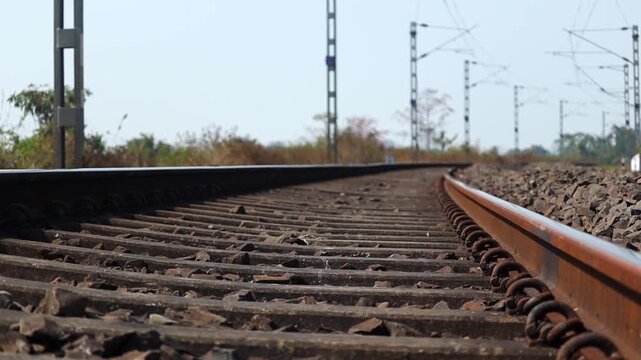
Even as railway projects in Meghalaya’s Khasi and Jaintia Hills continue to face sustained resistance over fear of illegal immigration and influx, voices from the Garo Hills region are increasingly advocating the expansion of rail connectivity into the western part of Meghalaya. After legislators from South Garo Hills appealed to Chief Minister Conrad K Sangma to pursue with the Centre the extension of the railway line, another legislator from Williamnagar, Marcuise N Marak, said they have communicated with Chief Minister Conrad Sangma, even as he acknowledges fear of influx from the people but said there are so many mechanism to check the influx practically on the ground.
The renewed push from Garo Hills has once again brought into focus Meghalaya’s deeply divided discourse on railway connectivity, with the State witnessing two sharply contrasting regional narratives over railway projects. While indigenous pressure groups in Khasi and Jaintia Hills continue to oppose railway projects unless stringent anti-influx mechanisms such as the Inner Line Permit (ILP) are implemented, several leaders from Garo Hills are pitching rail connectivity as a critical driver for economic growth, trade and communication.
NPP Working President and senior Garo Hills leader Marcuise N Marak said discussions on railway expansion and communication infrastructure have already been held with Chief Minister Conrad Sangma and legislators from the region. “We had already communicated with Chief Minister Conrad Sangma, we had several meetings, we are happy to communicate that also. We are in touch always and we discuss what are the best way of communication between it road way or railway which ever is best for us. We are in touch with the Chief Minister and he is also very much in touch with all the MLAs in Garo Hills.”
Strongly backing the proposal for railway expansion into East Garo Hills, Marak said, “We would want railway lines expanded to Williamnagar in East Garo Hills if the government of India wishes to extend the railway lines, we are very positive about it.”
Seeking to address concerns over influx, he maintained that adequate systems already exist to regulate migration. “We have a system where people are quiet apprehensive about the influx, but practically I would say there are so many mechanism to check the influx practically on the ground, so we are very positive if the railway line is extended, we welcome that.”
Railway expansion in Meghalaya has remained a politically sensitive issue for decades. While Garo Hills entered the railway map in 2014 with the establishment of the Mendipathar Railway Station in North Garo Hills district, railway projects in Khasi and Jaintia Hills have repeatedly encountered stiff opposition from indigenous civil society groups and pressure organisations fearing influx and Illegal immigration.
Pressure groups in Khasi and Jaintia Hills have consistently maintained that no railway project should be allowed without constitutional safeguards and implementation of the ILP regime to prevent unchecked influx.
The Meghalaya government, however, has maintained that it will not bulldoze railway projects in the Khasi-Jaintia region and that any decision on expansion would only be taken after taking all stakeholders on board.